Chromatography
Published over 14 years ago. See the latest and most current information on Chromatography.
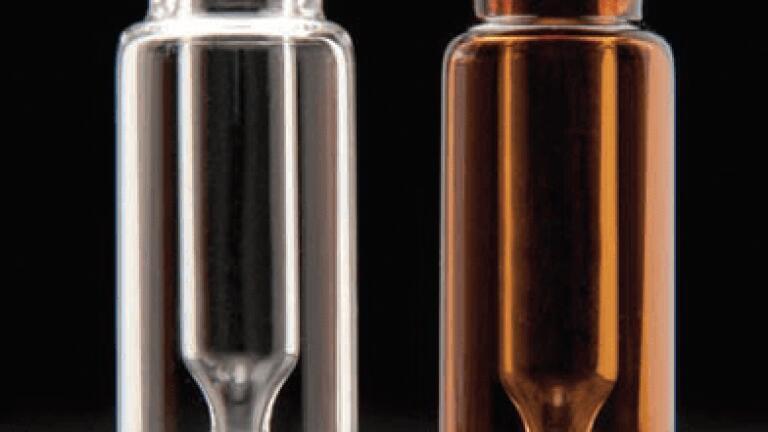
The new 300μL Interlocked R.A.M. (Robotic Arm Machine) Vial with 9mm Thread Finish, by JG Finneran Associates,
is a unique product for researchers tasked with managing a lot of chromatography sample vials in their laboratories.
Composed of a clear or amber Type I borosilicate glass, the vial and insert are fused together keeping the insert
permanently in place. This design enables accurate automated injection, and eliminates contamination risk
around the seam or space between the neck of the vial and the insert. The Interlocked R.A.M. Vial arrives ready to use
saving valuable time in the laboratory.
The Interlocked R.A.M. Vial is specifically designed to work in robotic arm autosamplers such as those available from
Agilent Technologies and others. The 12mm x 32mm outer dimensions is designed for robotic arms to easily grasp.
Chromatography samples are contained in a clear Type I borosilicate glass 300μL conical tip insert. The Interlocked
R.A.M. Vial includes a marking spot, which can be written on with a #2 pencil. The vial is also available with a 9mm
Screw Thread Closure option.
Unique chromatography sample vials and closures manufactured by JG Finneran Associates are available
internationally from a network of laboratory dealers.
ILM 51.6 Sept 2026





 Product directory