Chromatography
Published over 13 years ago. See the latest and most current information on Chromatography.
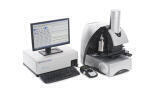
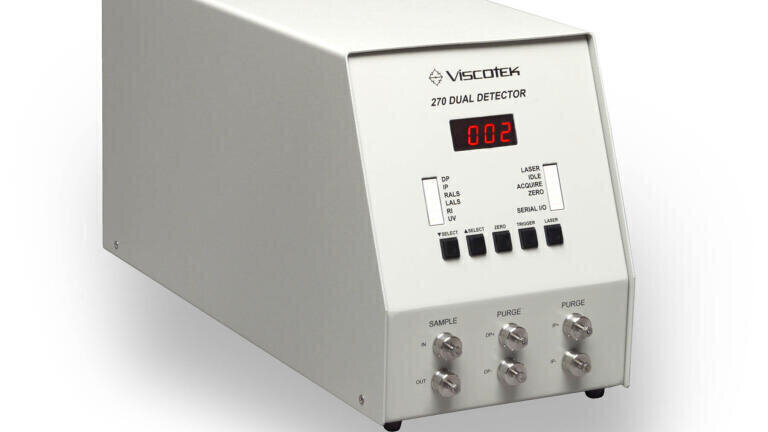
For those working at the forefront of polymer development, adding a Malvern Viscotek viscometer detector into gel permeation/size exclusion chromatography (GPC/SEC) set ups can help deliver the enhanced information need to achieve challenging performance specifications.
Studies with evolving commercial polymers, such as polymethylmethacrylate (PMMA) and polylactic acid (PLA), show how the structural information revealed by measuring viscosity parameters enables researchers to intelligently modify polymer chain length and branching to meet precise goals. Malvern Viscotek viscometers can be supplied as part of an integrated triple detector Viscotek GPC/SEC system or as an addition to any existing separation system.
GPC/SEC is a central analytical technique for the analysis of proteins, polymers and macromolecules because of its ability to measure defining characteristics such as molecular weight, molecular weight distribution and molecular size. Modern GPC/SEC systems typically incorporate multiple detectors that work together to increase information flow.
Viscosity measurements serve a dual function within this context. When used with a refractive index (concentration) detector, they give information on molecular weight/density. This permits the determination of accurate molecular weight distributions without a relevant standard, an important benefit for new or significantly modified polymers where appropriate reference materials may not be available. On the other hand, if molecular weight is directly measured via a light scattering technique, a viscometer enables the quantification of structural characteristics such a chain branching. This information supports the sophisticated control needed to develop materials closely matched to specific applications, to manufacture stable ocular lenses, for example, in the case of PMMA, and to replace conventional polymers with an environmentally benign alternative, in the case of PLA.
To read more about GPC/SEC analysis in PLA development click here.
To find out how GPC/SEC analysis is supporting the development of ocular lenses click here.
ILM 51.6 Sept 2026

 Product directory