Chromatography
Published over 15 years ago. See the latest and most current information on Chromatography.
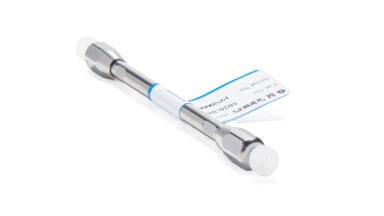
Phenomenex, Inc announces the publication of a case study, written by scientists at Pfizer, that demonstrates the results of a new method for residual API (active pharmaceutical ingredient) analysis. This new solution replaces 16 older methods for individual key ingredients, and has delivered cost savings of £320,000 (more than $516,000) per year. The method requires just one UHPLC instrument, using Phenomenex Kinetex® 1.7-micron core-shell columns, to resolve all 16 ingredients in just six minutes. In addition to instrument and time-savings, the method uses less solvent, reduces waste disposal costs and frees up lab analysts.
“High-volume laboratories, such as those in pharmaceutical QC, have an acute need to reduce operating costs and free up resources,” explained Jeremy Bierman, Brand Manager for HPLC products. “The Kinetex core-shell technology allows the development of faster and more efficient analytical methods to deliver significant cost and time savings.”The Kinetex 1.7-micron column is the first and only sub-2-micron core-shell UHPLC column on the market and typically delivers efficiency gains of 15 to 20% over traditional fully porous sub-2-micron columns.
ILM 51.6 Sept 2026

 Product directory