Electron
Published over 15 years ago. See the latest and most current information on Electron.
KYKY Technology Development Ltd (KYKY), originally known as the Beijing R&D centre of the Chinese Academy of Sciences (CAS), is a comprehensive hi-tech enterprise specialising in research, development, manufacture, and operation of scientific instrument and vacuum equipment. The most important scientific instrument of KYKY is KYKY series scanning electron microscope (KYKY SEM). KYKY also provides affiliated equipments of SEM, including EDS, chiller and sputtering coater.
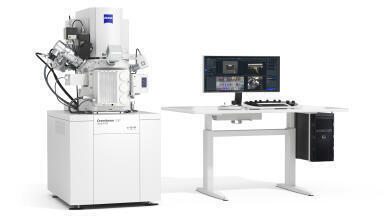
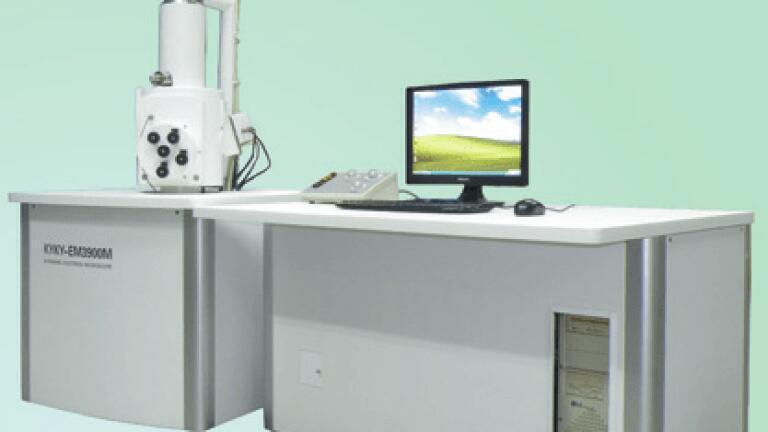
The latest KYKY-EM3900M scanning electron microscope with improved electron optical system and enhanced resolution can help users see their samples in greater detail. Even a novice can easily use this instrument. Rollers fixed under the instrument can help users move this instrument very easily. KYKY-EM3900M SEM will become a good asset thanks to these humanised designs.
Specification of KYKY-EM3900M SEM includes: resolution - 3.0nm guaranteed (Tungsten filaments); magnification - 6×〜300,000×; electron optical system - electron gun with openable forked tungsten cathode, accelerating voltage of 0〜30kV, lens system with three electron magnetic lens system, and objective lens aperture with three apertures selectable; specimen chamber - eight ports for EBSD,WDS, EDS, BSE detectors and other attachment installation; and specimen stage - movable range of X=80mm,Y=60mm,Z=50mm and tilt -5°-+90°,360°continuous rotation.
ILM 51.6 Sept 2026





 Product directory