Glassware
Published over 15 years ago. See the latest and most current information on Glassware.
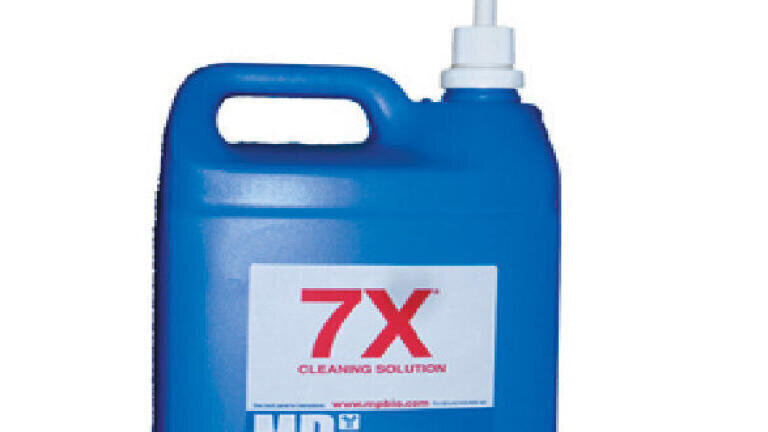
7X™ Cleaning Solutions are concentrated liquid detergents, intended for aqueous cleaning processes which require low cell toxicity, low debris, high efficiency of cleaning, and noncorrosion on the cleaned material.
Initially developed for cell culture laboratories, where cleanliness is crucial, these detergents shown a broad range of application other than glassware, and was used to clean re-usable parts of the endoscopic instruments, needles, laboratory surfaces, stainless stain instruments and titanium components without damages for the support material. Moreover optical components of instruments are efficiently cleaned because no fluorescent residues are left after rinsing.
7X is completely soluble in water at any concentration and drains completely from glassware in only a few seconds. A 5% solution in distilled water has a pH range of 6–9. This neutral pH will not induce or cause etching of delicate glassware without leaving residues. The formulations are stable and support overnight soaking, heating and autoclaving treatments. This detergent exists in Phosphate free and automatic washing formulations, in a wide range of pack size covering most of the laboratory or industrial needs. MP Biomedicals Europe.
ILM 51.6 Sept 2026





 Product directory