Incubators
Published over 15 years ago. See the latest and most current information on Incubators.
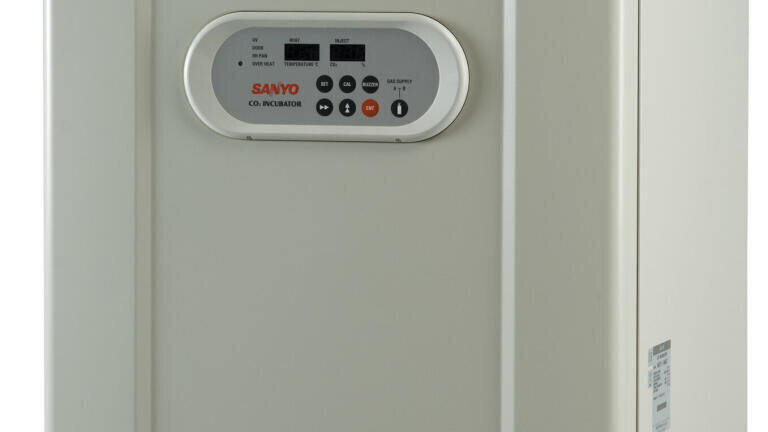
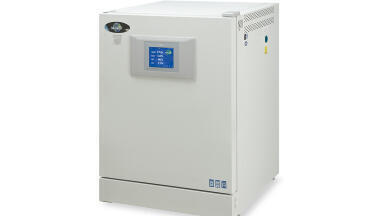
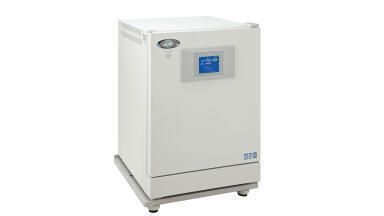
The new MCO-18AC CO2 Incubator compliments the extensive range of other SANYO CO2 and Multi-gas incubators. This new incubator has a capacity of 170L and can be used as either a bench top unit or double stacked to form a 2 high bank of CO2 incubators. A roller base can be added to make double stacked CO2 incubator units more portable or for access to the rear of the units. Temperature is accurately controlled using SANYO’s direct heat air jacket design which provides optimum shelf-to-shelf reproducibility.
The Incubators CO2 levels are accurately maintained and controlled using a Thermal Conductivity Sensor. If Contamination Control is one of your considerations, then the MCO-18AC provides an ideal solution. The interior of the CO2 incubator is made from a copper-enriched stainless steel alloy called InCusaFe® which constantly decontaminates all surfaces of the interior all-day every-day automatically. So there is no need to run specific decontamination cycles. The incubator does it all for you without you having to press any buttons. If you need to really attack contaminants, the MCO-18AC offers the additional protection from airborne contamination via the optional SafeCell ™ UV system. SafeCell ™ UV takes air from the incubator and decontaminates it before circulating the air back around the incubator, without exposing your cells to UV
ILM 51.6 Sept 2026




 Product directory












-(1).jpg)
-(1).jpg)