IT solutions
A new two-part white paper series from ACD/Labs explores how the AI-driven convergence of the digital-physical Design-Make-Test-Analyze (DMTA) cycle is transforming pharmaceutical discovery and development—bridging gaps between systems for improved efficiency and accelerated innovation.
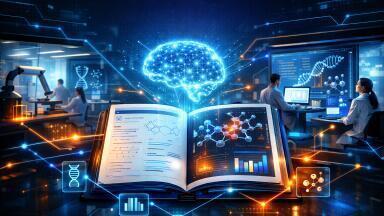
Artificial intelligence (AI) continues to dominate scientific headlines. Across the pharmaceutical industry, AI and digitalization are converging to reshape how molecules are designed, made, tested, and analyzed.
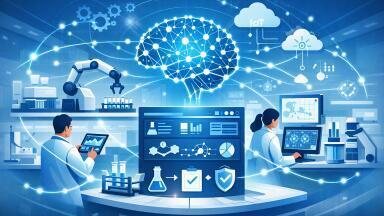
ACD/Labs has released a new two-part white paper series, AI-Digital-Physical Convergence: The Future of DMTA in Drug Discovery and Development, which explores how AI and digital technologies are turning DMTA into a closed loop of continuous learning. Rather than operating in silos, the “digitalized-physical” lab of the future connects data, devices, and decisions seamlessly across R&D.
In most labs, valuable data is scattered across instruments and systems. Scientists spend significant time searching for and transcribing experimental results. Work is often duplicated due to their inability to access contextual legacy data. The first paper in the series highlights how digitalized lab processes can bridge these gaps in pharmaceutical discovery. Automation and digitalization of data capture, standardization of contextual experimental data, and the ability to leverage data in AI applications can shorten DMTA cycles from preliminary drug design, through synthesis and testing, to analysis and decisions.
This shift from a ‘vicious’ cycle—where fragmented data and manual processes slow innovation—to a ‘virtuous’ one—where connected systems and AI models continuously learn and improve over time—is critical to make use of experimental data and accelerate R&D.
The white paper focuses on how pharmaceutical DMTA cycles can be improved through automation, digitalization, and leveraging of data. Machine learning models and large language models (LLMs) are being trained to predict synthetic routes, optimize reaction conditions, and propose next experiments. When paired with structured, high-quality data from digitalized systems, AI can transform R&D into an adaptive, predictive process.
This AI-digital-physical convergence means that physical experiments no longer exist in isolation. Each experiment generates data that feeds into AI models, which in turn inform new hypotheses—creating a self-reinforcing feedback loop. For scientists, this translates to faster insight generation, more efficient lab operations, and reduced experimental waste.
Realizing this vision requires more than adopting AI tools. The white papers outline a practical roadmap for organizations aiming to modernize their DMTA cycles and embrace the evolution of the digital/physical laboratory. Automation and informatics must evolve hand-in-hand to ensure that data integrity, reproducibility, and regulatory compliance remain intact.
Like many pharmaceutical organizations, Takeda has invested significant time and effort in digitalizing and automating R&D. One crowning achievement of these efforts is progress towards a 24/7 autonomous lab for synthetic process development in both Japan and the US. They have created an automated lab, complete with robots to transfer samples and plates between robotics platforms and analytical instruments, and software to manage experiment execution and data management across the entire end-to-end workflow. Watch the webinar to learn more.
As pressure mounts to deliver better therapies faster, this AI-driven, digitalized-physical approach to DMTA offers a path forward. By uniting chemistry, informatics, and automation, pharmaceutical organizations can unlock knowledge trapped in data silos and accelerate the journey from molecule design to market.
ILM 51.6 Sept 2026




 Product directory
















.jpg)