IT solutions
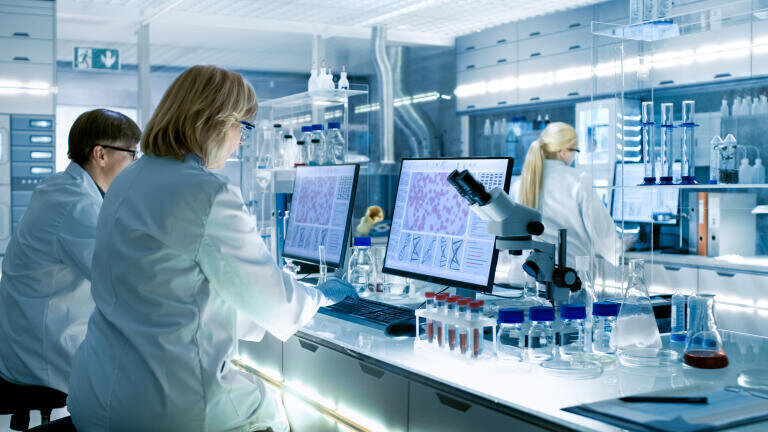
Introducing new instrumentation into an established laboratory environment often delivers much-needed performance gains, but it can also add new layers of complexity for scientists. When additional software packages are required for every system, it can result in fragmented workflows, inconsistent user experiences, and increased demands for IT support. This was the situation facing Takeda’s discovery research team, where scientists were managing numerous vendor-specific tools to process analytical data from a wide range of techniques.
When new UPLC systems were introduced into the open access LC/MS lab, the benefits of throughput and flexibility were clear, but scientists were hesitant to embrace them—yet another system meant yet another software package to get their heads around.
The need for a more consistent, simplified approach to data analysis became clear, ideally one that would:
The team at Takeda trialled Spectrus Processor™ as a single environment for chemical analytical data handling. The trial, involving scientists from medicinal chemistry, process chemistry, and analytical research, demonstrated that the software could meet the needs of all these groups. Its intuitive interface minimized training requirements, and following a successful evaluation, the solution was rolled out across the discovery organization at the Takeda Boston site, with approximately 80 users gaining access.
Spectrus Processor is now used for routine analysis across ~15 different instruments, including 400 and 500 MHz NMR machines, multiple UPLC systems, XRPD, TGA, DSC, and IR spectrometers from various vendors. While some vendor tools remain in place for specialized purification work, the majority of day-to-day processing is now centralized. Users have found the system not only comparable to the third-party and vendor solutions it replaced, but in some cases more capable. Even for less frequently used techniques, such as IR spectroscopy, Spectrus Processor has delivered unexpected value, with users able to interpret data more effectively than before.
By consolidating analytical data into one environment, the team has improved efficiency, reduced software overhead, and simplified training. Scientists spend less time navigating multiple systems and more time focusing on results.
Furthermore, by incorporating Spectrus Processor™ into their core analytical processes, Takeda now have the foundations in place to move towards a single platform for handling and sharing live analytical information, such as ChemAnalytical Workbook™.
Find out more about how analytical data processing, analysis, and reporting can be streamlined with unified software tools.
ILM 51.6 Sept 2026




 Product directory
















.jpg)