Clinical, medical and diagnostics
Researchers have developed a compact fluorescence reader that can analyse test and control samples simultaneously, with the aim of making sensitive molecular tests for infections and cancer-associated biomarkers more practical outside central laboratories
Advances in medical technology has brought additional healthcare tools into the home, from blood pressure and blood glucose measurement to tests for infectious disease. Researchers at the University of Illinois, Urbana-Champaign, USA, have now developed a compact molecular testing device intended to make sophisticated laboratory tests at the point of care in clinic – or even in the home.
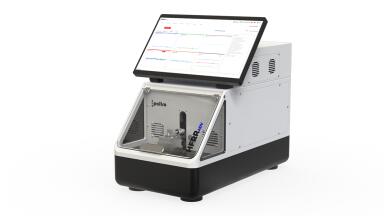
The device, known as VPodDuo, can detect and compare fluorescence signals from a test sample and a control sample simultaneously. Its developers said this paired approach could improve the reliability of sensitive molecular assays outside conventional laboratories while allowing the same reader to work with tests for several biological targets.
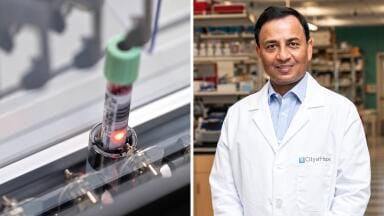
The research was led by Dr. Han Keun Lee in the laboratory of Professor Brian Cunningham from the department of electrical and computer engineering, in collaboration with Professor Xing Wang an expert in bioengineering.
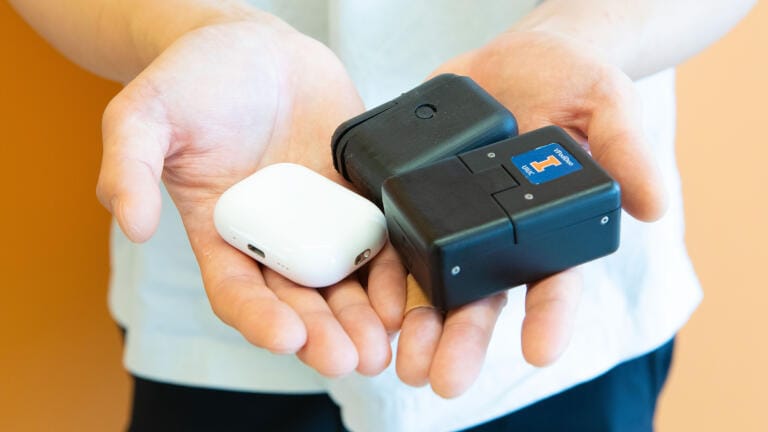
Comparable in size and shape to a wireless earbud case, the reader was designed to measure fluorescent signals generated by molecular tests for pathogens and cancer-associated biomarkers. The researchers demonstrated its use to detect genetic material associated with Zika virus, HIV and methicillin-susceptible Staphylococcus aureus (MRSA), as well as human genetic markers that can indicate the possible presence of cancer cells.
“I have an ambition that we can bring cancer detection to the home. Currently, detecting cancer often requires going to a hospital and having blood drawn,” Lee said.
“My job here is to be able to bring those tests out to the world so people can start utilising them and have better access to state-of-the-art technologies,” he said.
Many familiar home diagnostic tests use a lateral-flow format similar to pregnancy tests or COVID-19 rapid antigen tests. Although inexpensive, fast and easy to use, their sensitivity can be limited and they generally provide qualitative or semi-quantitative results.
Laboratory molecular assays can achieve considerably greater sensitivity and provide quantitative measurements through fluorescent labels which allow for very small quantities of genetic material or other molecules to be detected. However, conventional fluorescence readers can be bulky, expensive and require highly trained personnel.
“There are many different ways of quantifying fluorescent assays. One example is using a camera to capture the whole reaction area … but this requires sophisticated instrumentation. We decided to stick with a photodetector,” Lee said.
A photodetector measures the intensity of incoming light without producing an image, and so can substantially simplify an optical sensing system. However, a reader with only one detector cannot readily measure a patient sample and negative control simultaneously which makes it more difficult to distinguish genuine fluorescence from background signals.
Lee and colleagues had previously developed a compact fluorescence reader called VPod but it could measure only one sample at a time. VPodDuo extends the design through a paired test-and-control configuration which measures fluorescence from both samples simultaneously and provides a direct baseline against which to compare the test signal.
The researchers also designed VPodDuo to work with several forms of molecular detection chemistry rather than a single dedicated assay. The instrument measures green-emitting fluorescence, allowing compatible assays to share the same optical reader even when they detect different pathogens, genes or biomarkers.
Validation experiments showed that VPodDuo could accurately detect and quantify genetic material associated with Zika virus, HIV and MRSA. Tests of human genetic markers associated with the possible presence of cancer cells also demonstrated the platform’s potential to support both infectious disease testing and future cancer-screening applications.
“The purpose of testing at the point of care is not necessarily to give a definitive diagnosis but rather to allow more frequent testing so that someone has a better chance of receiving timely treatment,” Lee added.
The researchers also treated usability as an integral part of the design. VPodDuo has wireless connectivity to a mobile device and a software application intended to assist users with operation and interpretation of results. The system also incorporates safeguards to reduce the risk of accidental misuse.
“It’s not just about the individual test for point-of-care use, it’s about the entire system,” Lee said.
“We wanted to address this from a system-level engineering perspective for fluorescent molecular testing,” he said.
The results suggest that compact photodetector-based instruments could provide a practical route to more sensitive molecular tests in decentralised healthcare. Further development and clinical validation would be required before such systems could support routine home testing.
For further reading please visit: 10.1109/JSEN.2026.3693175
ILM 51.6 Sept 2026





 Product directory