Laboratory events news
Large UK Health Security Agency study has shown that maternal vaccination against respiratory syncytial virus reduced infant hospitalisation risk by more than 80 per cent, with earlier administration in pregnancy linked to stronger protection
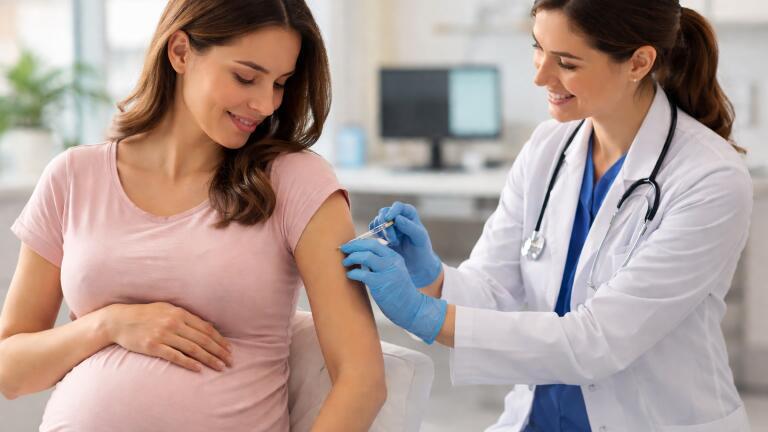
A large real-world analysis presented at the European Society of Clinical Microbiology and Infectious Diseases Global Conference 2026 in Munich, in April 2026, has shown that maternal vaccination against respiratory syncytial virus (RSV) significantly reduces the risk of hospitalisation in young infants, with protection exceeding 80 per cent when vaccination occurs at least two weeks before birth.
RSV is a common viral pathogen that can cause severe respiratory disease in infants and young children, particularly lower respiratory tract infections such as bronchiolitis and pneumonia being a leading cause of infant hospital admission worldwide. Early-life infection has been linked to longer-term pathological consequences, including recurrent wheeze, asthma, repeated hospital admissions and impaired lung development.
In England, a national maternal vaccination programme administered by the National Health Service (NHS), was introduced in September 2024 to target RSV. The programme has offered the bivalent prefusion F vaccine to pregnant women from 28 weeks’ gestation, with the aim to confer passive immunity to infants during the early months of life when vulnerability to severe infection is highest.
To assess programme impact, investigators from the UK Health Security Agency (UKHSA) conducted a retrospective cohort study using linked national datasets. These included NHS maternity records, immunisation data, and hospital and laboratory surveillance systems. The analysis encompassed 289,399 infants born between 2 September 2024 and 24 March 2025, representing approximately 90 per cent of all births in England during the study period.
Across the cohort, researchers identified 4,594 hospitalisations associated with RSV. Infants born to unvaccinated mothers accounted for 55 per cent of the study population but represented 87.2 per cent of all hospital admissions, which indicated a disproportionate burden of severe disease in this group.
By contrast, infants whose mothers received vaccination at least 14 days before delivery experienced a substantially reduced risk of hospitalisation. Vaccine effectiveness reached 81.3 per cent relative to infants of unvaccinated mothers, which demonstrated a strong protective effect in early infancy.
“As the largest study to date examining the impact of this [maternal] vaccine on infant hospitalisation, these findings provide robust evidence that vaccination offers substantial protection against severe illness in young infants,” said lead author Dr. Matt Wilson, an epidemiologist at the UKHSA.
“We found a clear relationship between timing and protection, with effectiveness increasing as the interval between vaccination and birth lengthens, reaching close to 85 per cent when vaccination occurs at least four weeks before delivery,” he added.
The analysis has also clarified the importance of timing. Protection appeared to increase progressively as the interval between maternal vaccination and delivery extended, which reflects the time required for maternal antibody generation and transplacental transfer.
“While at least two weeks are typically needed for optimal protection, infants born 10 to 13 days after vaccination had around 50 per cent fewer hospital admissions compared with those whose mothers were unvaccinated, whereas no reduction was seen when vaccination occurred less than 10 days before birth,” Wilson added.
“This reinforces the importance of vaccinating as early as possible within the recommended window, while also showing that even when given later in pregnancy, some protection is still possible from around 10 days before birth – although earlier vaccination remains preferable,” he said.
The study has also examined outcomes among preterm infants, who represent a particularly vulnerable population due to immature lung development and immune function. Vaccine effectiveness in preterm infants reached 69.4 per cent when at least 14 days elapsed between vaccination and birth, which indicates meaningful protection even in this high-risk group.
“These findings are particularly important for preterm infants, who are among the most vulnerable to severe RSV infection. With sufficient time between vaccination and birth, we saw good levels of protection in these babies.
“Giving the vaccination early in the third trimester, as recommended by the World Health Organization, could protect most preterm infants,” Wilson said.
The authors have emphasised that further evaluation is required to determine long-term programme impact at population level and to assess how protection evolves as infants age beyond the neonatal period.
Future analyses will also examine comparative effectiveness between maternal vaccination and monoclonal antibody immunisation strategies, particularly in very preterm infants for whom both interventions are currently recommended.
Wilson has also highlighted the global relevance of these findings, particularly in settings where RSV contributes substantially to infant mortality.
“While survival from RSV bronchiolitis is high in high-income countries, it remains a major cause of infant mortality in low- and middle-income countries. These findings underscore the potential benefits of wider rollout of maternal RSV vaccination globally in line with the World Health Organization’s recommendations,” he concluded.
ILM 51.6 Sept 2026




 Product directory
















.jpg)

.jpg)