Laboratory products
Published over 17 years ago. See the latest and most current information on Laboratory products.
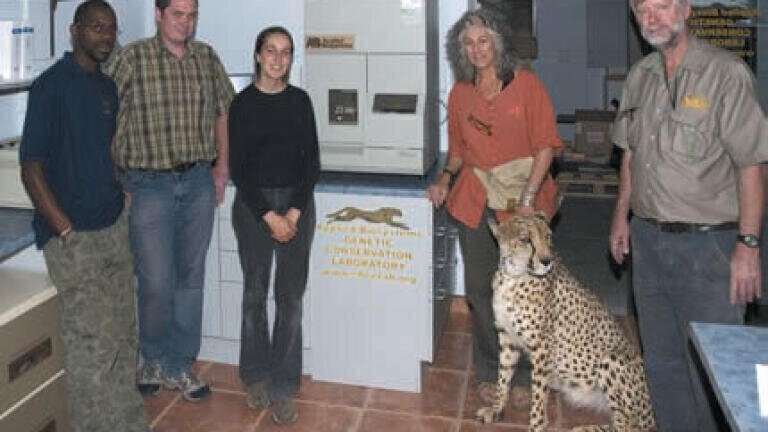
A new high-tech DNA laboratory is the latest tool in the international effort to save the endangered cheetah population. The Applied Biosystems Genetic Conservation Laboratory, located at the headquarters of the Cheetah Conservation Fund (CCF) in Otjiwarongo, Namibia, is the result of a collaboration between CCF and Applied Biosystems. Through this arrangement, Applied Biosystems is providing genetic analysis systems and reagents to enable CCF to initiate a genetic conservation programme as part of its mission to help ensure the long-term survival of the cheetah.
To address the challenge of effectively monitoring the wild cheetah population, five scientists have been trained on advanced genomic analysis technology and have developed a non-invasive, genetic monitoring programme designed to provide accurate population estimates of cheetahs in Namibia and other homerange countries. This includes the development of a multiplexed panel of genetic markers to genotype and track cheetah populations. The laboratory is also being used to address research questions involving how cheetah genes transfer from one population to another, geographical patterns of genetic variation, and adaptive questions related to the animals’ behaviour in specific habitats.
Cheetahs are one of the most specialised cat species, exhibiting minimal amounts of genetic diversity with approximately 99% of their genes being identical. In most mammalian species, 80% of the genes in related
individuals are identical. This lack of variation is the result of inbreeding, compromising their ability to adjust to sudden environmental changes and making them highly susceptible to certain viruses, as well as causing
reproductive and health problems. Today, less than 10,000 wild cheetahs exist globally, classifying them as an endangered species under the US Endangered Species Act. Namibia is home to the largest number of
free-ranging cheetahs, with 20% of the world’s wild population.
ILM 51.6 Sept 2026



 Product directory