
Laboratory products
Published over 8 years ago. See the latest and most current information on Laboratory products.
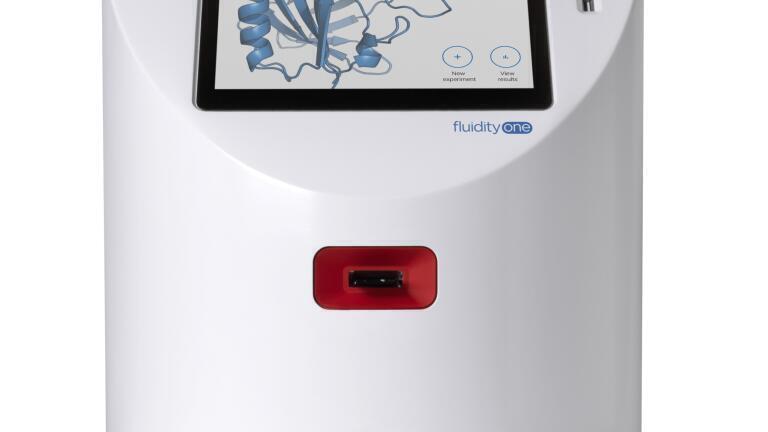
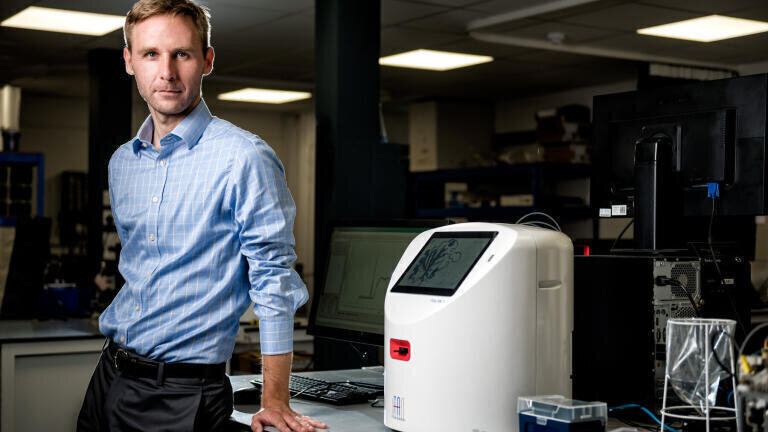
Proteins are the building blocks of life. They form the structure of cells, regulate cellular activity and carry out the biochemical processes that underpin function in every living organism. To understand proteins and their function, we must understand the way they fold, aggregate and interact. Fluidic Analytics Ltd, Cambridge UK, has announced the global launch of its Fluidity One system, which gives scientists the ability to observe these phenomena in a biologically relevant context, by measuring the size and concentration of proteins in their native state, without the need for surfaces or matrices. This technology can be applied to fundamental scientific research applications and the development and manufacture of biopharmaceuticals.
The Fluidity One system showcased at the Fluidic Analytics booth (#A26) during the MipTec Exhibition, part of Basel Life 2018, which was held 12–14 September, Congress Centre, Basel, Switzerland.
“The Fluidity One offers a fundamentally better way to characterise proteins – in solution, in their native state, and without the need for surfaces, matrices or ionisation. This approach gives our customers access to unique quantitative insights into protein behaviour that are not accessible using other approaches.”
Professor Tuomas Knowles, Chief Scientific Officer, Fluidic Analytics
“Fluidic Analytics envisions a world where information about proteins and their behaviour transforms our understanding of how the biological world operates. The Fluidity One is the first in a series of products that will make it easier for our customers to extract unprecedented insights for an ever-expanding range of applications. “
Dr Andrew Lynn, Chief Executive Officer, Fluidic Analytics
Built on peer reviewed science and patented Fluidic Separation and Detection technology, the Fluidity One system analyses protein in solution and in their natural state using Microfluidic Diffusional Sizing (MDS). By simply loading 5 µL onto the chip, a scientist can rapidly measure changes in protein size caused by folding, aggregation or interactions with other proteins in a biologically relevant context. The Fluidity One enables:
For more information on how the Fluidity One system characterises proteins, please follow the link
Fluidic Analytics also presented oral and poster communications at this year’s MipTec Exhibition, including:
ILM 51.6 Sept 2026



 Product directory


.jpg)
.jpg)










.jpg)
.jpg)
.jpg)
.jpg)