Laboratory products
Published over 15 years ago. See the latest and most current information on Laboratory products.
Lab M Ltd have added Differential Reinforced Clostridial Medium ISO (DRCM) to their highly respected anaerobe range. This new medium is for the detection and enumeration of the spores of sulphite-reducing anaerobes, as described in BS EN 26461-1 and ISO 26461-1, often used as indicators of faecal contamination.
Sulphite reducing anaerobes - Clostridia spores in particular - can be useful indicators of intermittent and remote faecal contamination. Widespread in the environment, the spores of these organisms are more resistant than vegetative cells to physical and chemical change, and to chlorination, often surviving in water for long periods.
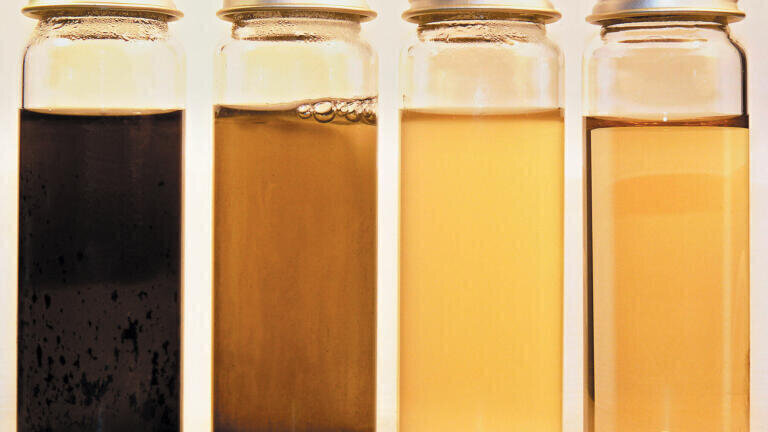
After first treating samples to remove vegetative cells, DRCM is used with the Most Probable Number (MPN) method to determine Clostridia content per volume of sample. Thanks to the inclusion of Iron (III) citrate in the DRCM formulation, blackening of the medium indicates sulphite reduction, highlighting the presence of the sulphite-reducing bacteria.
ILM 51.6 Sept 2026



 Product directory