Laboratory products
Published over 14 years ago. See the latest and most current information on Laboratory products.
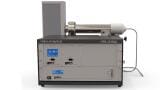
New experimental data published by Malvern Instruments illustrate the real-world capability and flexibility of the Mastersizer 3000 laser diffraction system for the particle size measurement of dry powders. Equipped with the unique Aero S dry dispersion unit, the Mastersizer 3000 breaks new ground in dry powder particle sizing and experimental results are described in ‘Extending the boundaries of laser diffraction measurements: Enhanced dry dispersion with the Aero S’, a new publication on the Malvern website. This summarises a series of studies that demonstrate how the Mastersizer 3000 deals equally efficiently with materials ranging from pigments to milk powder and coffee, delivering effective dispersion without particle damage, even for fragile materials. Compared with other laser diffraction systems it significantly broadens the range of materials and applications to which this convenient measurement technique can be applied. Visit www.malvern.com/dry-powder-particle-sizing.
Dry particle size measurement is efficient, is especially useful for moisture sensitive materials, and since it requires no dispersants it is environmentally friendly. However, it relies on efficient dry dispersion of the sample, requiring sufficient dispersive energy to completely deagglomerate the sample but without inflicting particle damage.
The modular design of the Mastersizer 3000’s Aero S dispersion unit provides options for controlling dispersion that include an adjustable hopper, different feed tray designs and a choice of two different venturis. The standard venturi has no impaction surfaces and uses shear forces to disperse the sample, while the high energy venturi uses impaction to achieve more aggressive dispersion.
The new data illustrate the suitability of different configurations of the Aero S for widely differing materials and shows how the flexibility of the system enables the user to develop a robust method for each and every type of sample. All modular components are automatically recognised by the system software so an optimised test set-up is readily locked into a Standard Operating Procedure that automates all subsequent measurements.
LMUK 51.7 Nov 2026

 Product directory













,-Perfection-Under-Bench-Fridge-(mode.jpg)