Laboratory products
Published over 16 years ago. See the latest and most current information on Laboratory products.
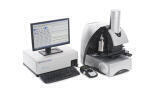
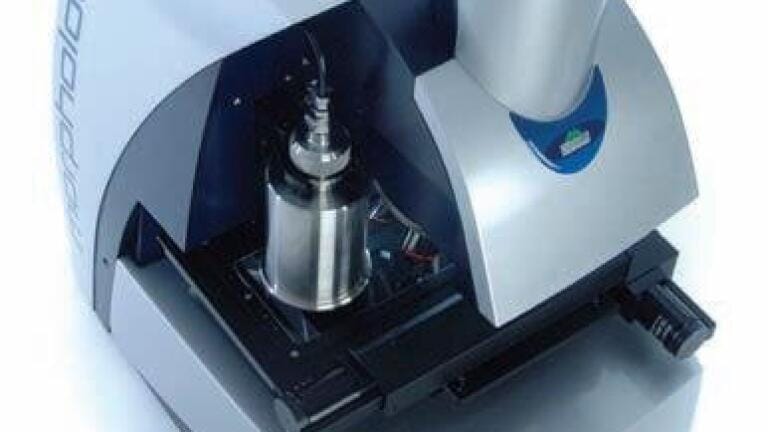
A new application note from Malvern Instruments outlines research and methodology for measuring the size, shape and intensity of particles in mineral-based powder make-up, using the Morphologi G3 image analysis based particle characterisation system. The freely downloadable publication ‘Morphologi G3: Understanding Mineral-based Make-up using Size, Shape and Intensity Measurements’, demonstrates how to capture and analyse data for use in optimising the brilliance and coverage of powder makeup.
The Morphologi G3 combines high quality, automated imaging with statistically significant particle shape and particle size measurements delivering more reliable characterisation than is typically obtained with manual microscopy. Images of every particle analysed are retained by the system and can be used to visually inspect the products, thereby providing a qualitative analysis of the sample.
An increasingly popular consumer care product, mineral-based powder make-up is made by blending particles of specific size and shape to obtain a product designed to perfectly hide the fact that it is actually made of discrete particles. The size and shape of constituent particles affect their light dispersing properties, and, in doing so, highly influence final product performance. Overly large particles appear powdery on the skin while those that are too small deliver an insufficient masking effect. Particle shape is equally important. For example, plate-like crystals create a pearlescent effect whereas the size of the plates determines the level of sparkle: Small plates give a more opaque smooth finish, while larger plates add a brilliant spark.
Particle imaging is a discipline that was once labour-intensive and highly subjective because it had to be performed manually. The development of automated particle imaging instruments equipped with integrated computer-controlled dispersion, advanced image processing and statistical analysis tools, such as the Morphologi G3, have taken this informative technique to a new level.
ILM 51.6 Sept 2026



 Product directory