Laboratory products
Published over 7 years ago. See the latest and most current information on Laboratory products.
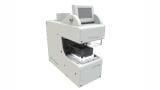
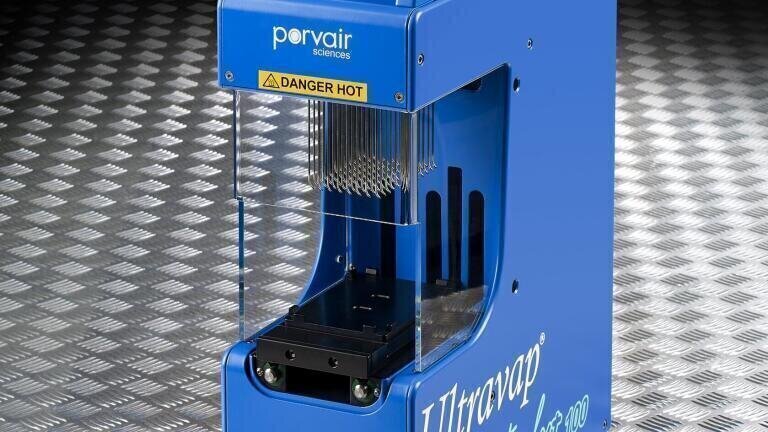
The UltraVap Mistral XT 100 from Porvair Sciences allows fully automated dry down of organic solvent-based samples in tubes up to 100mm in length.
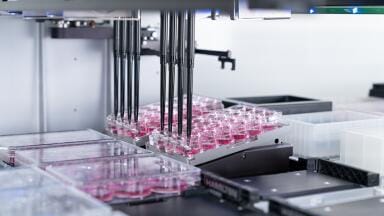
The instrument is a fully robot compatible nitrogen blow-down evaporator, suitable for integration adjacent to most leading laboratory liquid handling robots.
Designed with the demands of linear robots very much in mind, the UltraVap Mistral XT 100 uses a sample shuttle which can serve and retrieve tubes or microplates from the deck of PerkinElmer, Tecan, Hamilton and Beckman liquid handlers. This new colour touchscreen controlled solvent dry down station accepts 24-, 48-, 96- or 384-well microplates, tubes up to 100mm in length and comes complete with clear safety side screens and full integral fume management within the unit.
Designed to remove the traditional laboratory ‘bottleneck’ of solvent removal, the UltraVap Mistral XT 100 offers significant throughput advantages to laboratories looking to optimise sample preparation of single microplates or smaller numbers of tubes.
Installation of the UltraVap Mistral XT 100 requires only connection to a gas supply and mains electricity. Safety of solvent removal operation is ensured as this compact CE marked unit fits into all fume cupboards.
For further information please click here.
ILM 51.6 Sept 2026



 Product directory


.jpg)
.jpg)










.jpg)
.jpg)
.jpg)