Laboratory products
Published over 9 years ago. See the latest and most current information on Laboratory products.
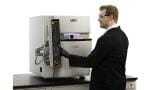
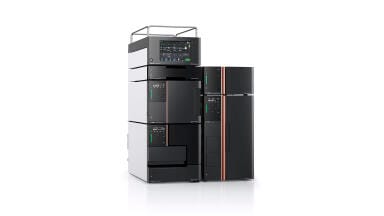
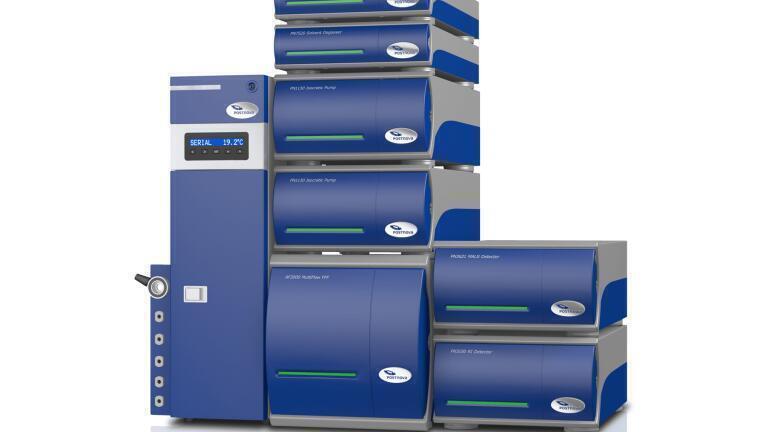
Postnova Analytics announces the AF2000 MALS, a new temperature controlled Flow Field-Flow Fractionation - MALS system developed to provide unmatched separation, characterisation and fractionation of biopharmaceutical proteins.
The AF2000 MALS employs a similar setup to a traditional GPC-MALS system but avoids the limitations of column-based chromatographic separations. In the AF2000 MALS system the liquid chromatography column is replaced by a proprietary separation channel technology that retains molecules based only on size and by the influence of a cross flow as a separation force. Because of the unique design of the system and the absence of any stationary phase, separation on the AF2000 MALS is achieved without exerting shear forces and stress on the proteins and aggregates being separated.
Incorporating Multi-Angle Light Scattering (MALS) and Asymmetric Flow Field-Flow Fractionation (AF4) the AF2000 MALS offers separation over a very broad molar mass and particle size range. With the additional benefit of being able to undertake precisely temperature controlled experiments, the AF2000 MALS is able to achieve separations with higher resolution, reproducibility and recovery then has previously been possible.
ILM 51.6 Sept 2026




 Product directory