Laboratory products
Published over 17 years ago. See the latest and most current information on Laboratory products.
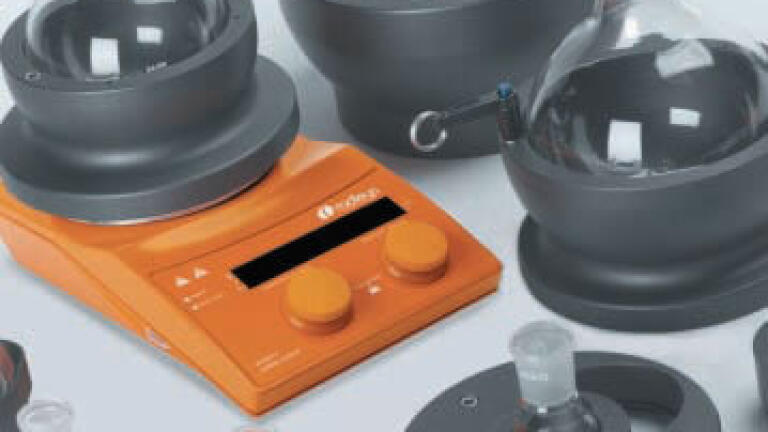
Designed to operate with all leading makes of stirring hotplate, Heat-On blocks from Radleys offer a rapid and safe means of heating round bottom flasks from 10ml to 5 litres.
With increasing focus on health and safety issues many Organic Synthesis labs are choosing reaction blocks located on stirring hotplates as their preferred way of heating round bottom flasks to eliminate the inherent mess and dangers associated with using oil baths and heating mantles. However, not all reaction block designs offer the same level of performance, safety and operational productivity.
In comparative tests summarised in Applications Bulletin TDS02S (see http://www.radleys.com/pages/products/heat-on.shtml), Radleys show that the lower thermal mass of Heat-On blocks produce significantly faster heat-up times and faster post-synthesis cool down times than competitive reaction blocks. In addition the Heat-On proprietary well design, that eliminates sticking and cracking of flasks associated with other reaction block designs, maximises the heated surface area further contributing to improved heat-up times. Because of these exclusive features Heat-On blocks are more efficient – using less energy to achieve the same results, saving money and reducing environmental impact.
ILM 51.6 Sept 2026



 Product directory