Laboratory products
Published over 16 years ago. See the latest and most current information on Laboratory products.
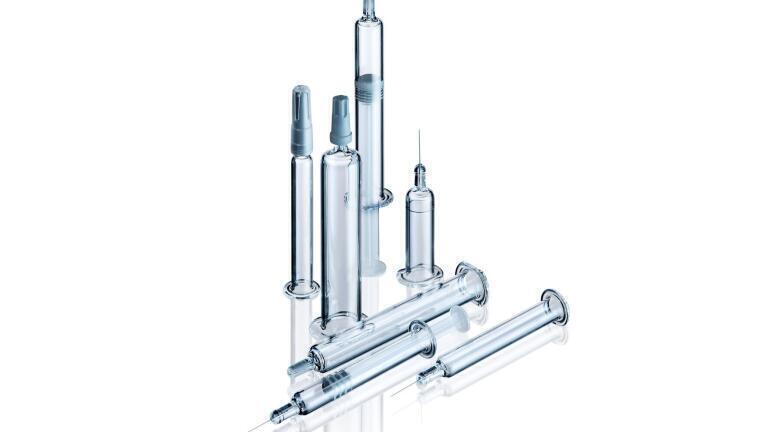
A completely new innovative laser-coding system enables glass containers for parenteral use to be clearly coded at the glass syringe manufacturer and tracked from production to end customer. This innovation can help pharmaceutical companies to develop a reliable Track Trace system and further reduce the risk of mix-up of syringes and batches. At the same time, this laser-coding technology is an effective means to counter drug
counterfeiters.
The benefit: patient safety for pharmaceutical and diagnostic products is guaranteed. The laser-coded containers meet the demands of clean room standards and no additional chemicals or materials are required for coding. Moreover, the laser-coding system can easily be integrated into existing filling systems, providing a stable, highly reproducible and safe process.The laser-coding process was developed and tested under production conditions by a team of experts from the pharmaceutical industry, glass tubing production and pharmaceutical packaging supplier for software and vision inspection. Involved were the companies Roche Diagnostics GmbH, SCHOTT forma vitrum AG, SCHOTT-Rohrglas GmbH, Seidenader Vision GmbH and Vesdo AG.
Various tests have proven that the laser coding causes no microcracks and has no effect on the mechanical stability of the glass. The process can safely code each container with an individual 2D data matrix code, making it 100% readable. To guarantee 100% readability of the code on the curved glass surface of the syringe, the team has developed dedicated algorithms and test methods.The laser-coding concept also offers a documentation tool that can provide a trail for each container including information such as: place of production, fill date, expiration date or day of use. The 2D data matrix code, which is marked on to the container is barely visible to the human eye but allows for the indexing of a database record which contains data related to the individual item, such as drug specification, dosage, production line, batch. This record can have more data added
during the lifecycle of the product.
ILM 51.6 Sept 2026



 Product directory