Laboratory products
Published over 7 years ago. See the latest and most current information on Laboratory products.
Intelligent hygienic design is the cornerstone of cleaning efficiency. It shouldn’t be overlooked because matching the right (i.e. specialist) furniture into your Standard Operating Procedure (SOP) has clear OPEX implications. The more effective the clean down, there should be fewer microbial alerts to investigate. A mismatch between furniture and SOP will impact the lifetime cost of ownership of each compromised item - opening you up to risk and additional cost.
Keeping it simple
There are two key elements to consider when developing the SOP. The first is how the design and placement of furniture will help or hinder clean down. It might sound obvious, but the secret to intelligent design is to make cleaning simple – if it looks easy to clean, it will be.
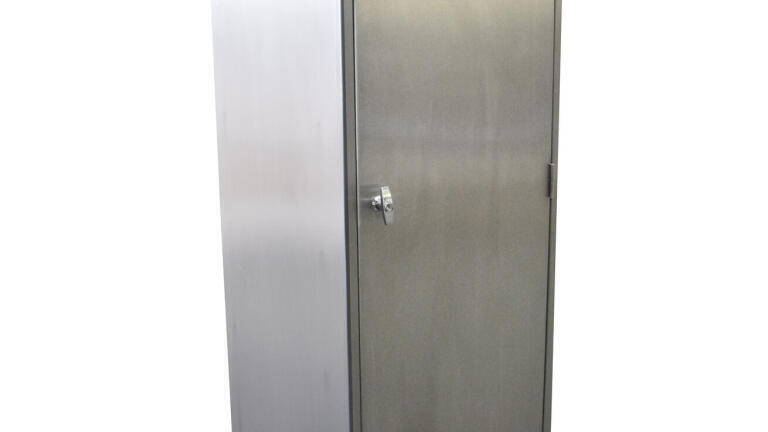
Take our new tall cupboards as a case in point: We have made it easier to clean the base and floor beneath by raising the ground clearance to an easy access 30cm. Small changes that make effective cleaning so much easier.
This philosophy can be applied to reducing contamination risk by designing out harbourage points where, dust and dirt can settle, or water can pool.
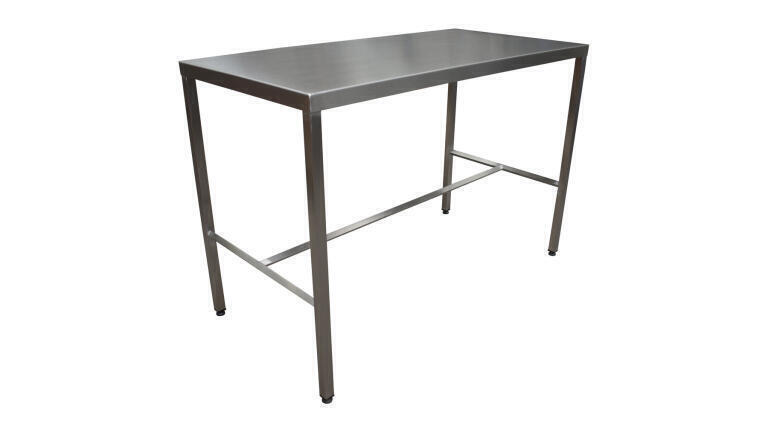
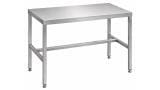
Consequently, we use diamond bracing for our table supports, this uses airflow changes to minimise the risk of particles settling. We eliminate unnecessary ledges and folds wherever possible. And think carefully about the design when they are essential for strength or utility. Cupboards are a case in point of course – the shelves on our tall cupboards are on a slight tilt so any liquids will not pool and we’ve added drainage holes to their bases to prevent pooling. The details matter.
A match made in heaven
The second consideration is to ensure your furniture aligns to your chosen SOP. In the simplest terms, is it tough enough? We’ve always been vocal proponents of 304 and 316 grade stainless steel for lab applications. It offers the benefits of its hygienic qualities, as well as its incredible toughness and durability in relation to mechanical, thermal and chemical sterilisation processes.
However, if we had to point to a downside, it’s that ultra smooth stainless steel with an RA count of less than the standard of 0.5Ųm can be pricey. To that end, we’ve paired our category-leading hygienic tables with Trespa® TopLab® surfaces which offer offering exceptionally smooth surface properties - reducing micropores that can harbour bacteria.
We’re justifiably proud of the reputation Teknomek’s craftmanship has gained over the past thirty years and Trespa® TopLab® products are a regular feature in many labs around the world. The first products will be available this year.
Easy to clean and keep clean. Small changes make a big impact.
ILM 51.6 Sept 2026



 Product directory


.jpg)
.jpg)










.jpg)
.jpg)
.jpg)

.jpg)

.jpg)
