Laboratory products
Published over 11 years ago. See the latest and most current information on Laboratory products.
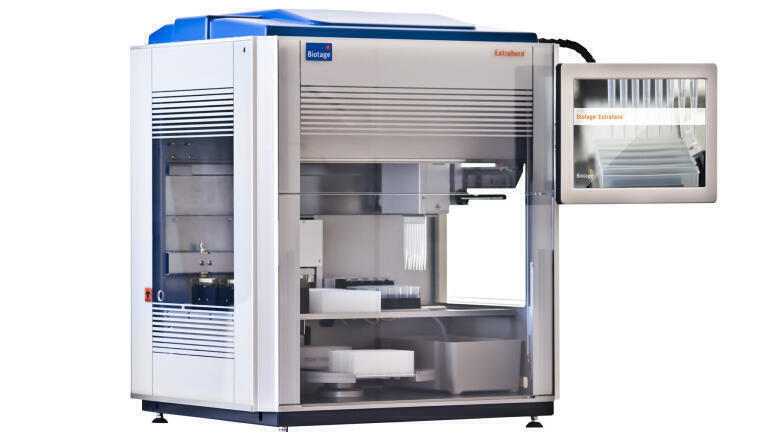
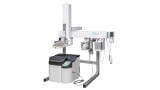
Biotage, a leading global supplier of solutions and technology for analytical, medicinal and peptide chemistry, announces the launch of the new Biotage® Extrahera™, an automated system for the processing of Supported Liquid Extraction (SLE) and Solid Phase Extraction (SPE) methods in both plate and column formats, making the system a flexible option for a wide variety of analytical laboratories.
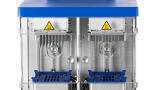
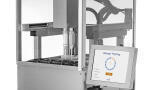
Biotage® Extrahera™ is a compact eight channel automation system that can handle 96 & 48 fixed well plate formats and 1 mL, 3 mL or 6 mL columns. The instrument has been designed for speed and flexibility and is capable of processing a complete 96-well plate SPE method in less than 30 minutes. The system comes pre-loaded with Biotage SPE and SLE methods for plates and columns, while new methods can be created in minutes; using the feature rich software, operators are able to just press “Start” and walk away.
By automating SPE or SLE methods the Biotage® Extrahera™ removes workflow bottlenecks in the laboratory; the higher throughput lowers the cost per sample of analysis and enables skilled analysts to be redeployed to other, more demanding tasks, such as data analysis. Automation also ensures that samples are prepared identically every time, regardless of the sample matrix, improving accuracy and precision of results.
“Sample preparation can be a laborious, time consuming process - implementing Biotage® Extrahera™ ensures that samples can be being generated to feed an MS system as fast as the extraction method permits and as fast as an end user can provide suitable samples for extraction,” said Paul Roberts, Analytical Product Manager, Biotage.
Biotage® Extrahera™ utilises a minimum of moving parts with easily accessible consumables and has been designed to minimise any potential cross contamination. Using positive pressure during processing provides more control and uniformity of flows across multiple columns and wells. The enclosed working area also ensures operator safety and reduces their exposure to solvents and hazardous compounds.
Lab Asia 33.4 - August 2026
 Product directory







-(1).jpg)





.jpg)