News
Published over 11 years ago. See the latest and most current information on News.
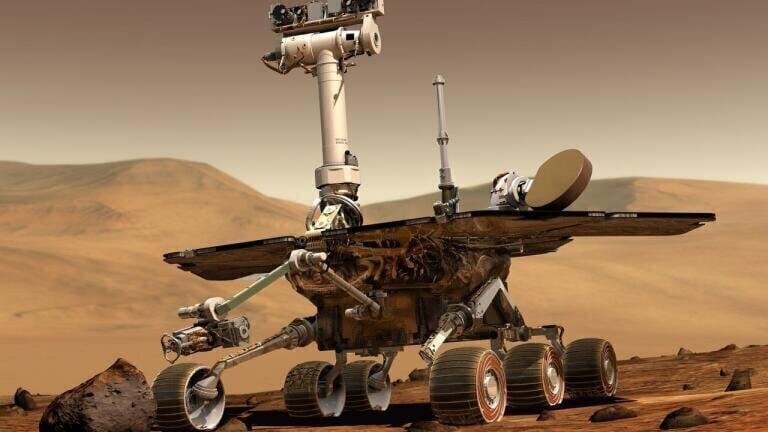
For centuries humans have been infatuated with the idea of life on Mars. From green antenna clad aliens to microscopic organisms invisible to the human eye, there are countless theories floating around as to what exactly is out there. Now, photos published by NASA are starting to spark even more speculation, with believers claiming to see all sorts of things in pictures sent back from the Curiosity rover.
One imaginative conspiracy theorist in particular sparked plenty of excitement when he swore he has identified a crab like alien face in what appeared to be a cave. They labelled the bizarre sighting a ‘facehugger crab’ in honour of its resemblance to the facehugger alien made famous in 1979 film, Alien. The picture was published by Facebook group Journey to the Surface of Mars who claim that NASA is covering up the truth about what really resides on the Red Planet.
While the group is adamant that NASA is hiding the existence of the ‘facehugger crab’ others maintain that they are nothing less than delusional. Seth Shostak, Senior Astronomer and Director of the Center for SETI Research explains that he receives images from optimistic theorists at least once a week. While they are initially exciting, he bursts the bubbles by putting the mysterious sightings down to an optical illusion.
“Those that send them to me are generally quite excited, as they claim that these frequently resemble SOMETHING you wouldn’t expect to find on the rusty, dusty surface of the Red Planet,” he says. “It’s usually some sort of animal, but occasionally even weirder objects such as automobile parts. Maybe they think there are cars on Mars.” He goes on to add that really, the sightings are nothing more than a cognitive phenomenon called pareidolia. The condition refers to the brain’s ability to conjure up shapes and objects out of random matter, similar to the human infatuation with spotting animals in the clouds.
The brain is capable of incredible things, and not all of them are positive. While we wouldn’t exactly call these theorists psychotic, they definitely have alternative ideas when it comes to life on Mars. In the article ‘Therapeutic Monitoring of Antipsychotic Drugs’ researchers look at how first generation drug treatments such as chlorpromazine and haloperidol are gradually being superseded by second generation, atypical antipsychotics with fewer side-effects. The most effective of these is clozapine, and there have been a handful of reports that indicate the existence of relationships between plasma antipsychotic concentrations and in vivo binding to receptors located in different parts of the brain. Fascinating stuff!
Lab Asia 33.4 - August 2026



 Product directory