News
A study at the Medical University of Vienna has found that the immune molecule pentraxin 3 remains elevated in patients months after a severe COVID-19 infection, suggesting a potential biomarker for long-term tissue damage, immune activation and post-viral complications like Long COVID-19
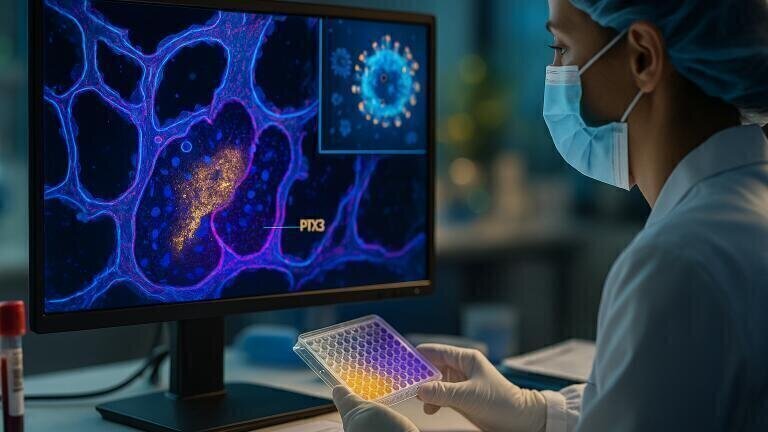
Researchers at the Medical University of Vienna (MUV) have reported that a specific immune system component – pentraxin 3 (PTX-3) – remains at significantly higher concentrations in the blood of patients who experienced severe cases of COVID-19, even months after their initial recovery.
The discovery has identified PTX-3 as a potential biomarker for lasting tissue damage, prolonged immune activation, and post-infection complications, offering new insight into the biological mechanisms that may underlie Long COVID-19 and myalgic encephalomyelitis, or chronic fatigue syndrome.
The study, led by Professor Winfried Pickl and Professor Rudolf Valenta from MUV’s Centre for Pathophysiology, Infectiology and Immunology, analysed the levels of acute phase proteins in blood samples from 141 convalescent COVID-19 patients, collected ten weeks and ten months after acute infection. The results were compared with samples from 98 uninfected individuals.
Acute phase proteins are elements of the innate immune system that are swiftly released into circulation during infection to control inflammation and facilitate tissue repair. In most cases, their levels return to normal shortly after recovery. However, the research team observed that PTX-3 remained persistently raised, marking the first evidence established of this prolonged response.
The data revealed that patients who had suffered severe disease continued to exhibit significantly raised PTX-3 concentrations ten weeks after infection. In several cases, these elevated levels also persisted ten months later, whereas patients with mild illness and uninfected control subjects did not show such increases.
“We [have] assumed that the higher PTX-3 levels either indicate ongoing tissue repair mechanisms or could hint at the presence of persistent SARS-CoV-2 remnants in the body,” said Professor Pickl.
“PTX-3 could serve as a biomarker for long-lasting tissue damage and long-term immune activation which may result in complications after COVID-19,” added Professor Valenta.
Previous studies had already described PTX-3 as a marker for severe acute COVID-19. The current research suggests that its role may extend into the recovery phase, linking persistent immune activity with the symptoms of Long COVID-19.
“Scientists have already connected long-term immune activation caused by ongoing repair processes and residual viral components in the body to the development of long COVID-19,” said Dr Bernhard Kratzer, the study’s first author.
“Our work provides important additional insights into these mechanisms,” he added.
The researchers have stated that further investigation will be essential to elucidate the long-term pathophysiology of COVID-19 and to confirm these findings in future prospective studies.
For further reading please visit: 10.3389/fimmu.2025.1672485
ILM 51.6 Sept 2026



 Product directory