News
Published over 10 years ago. See the latest and most current information on News.
When Mark Watney found himself stranded on Mars, there was only one thing for it – grow vegetables. While he didn’t exactly have a thriving patch, he did manage to grow and harvest enough potatoes to survive. Even if he did use Martian soil and his home-grown ‘metabolic waste’ as a fertiliser. The concept of a green fingered astronaut infatuated viewers, and left the world wondering whether or not it really is possible to grow plants on Mars.
According to botanist Paul Sokoloff of the Canadian Museum of Nature, the concept isn’t impossible. It is however, a long way off. He maintains that without protective greenhouses in place, it would take hundreds of years to successfully farm produce on the Red Planet.
This is largely due to the fact that Martian soil is lacking in the nutrients that make the Earth’s soil so wholesome. Water would simply seep straight through, leaving the plants to wilt and die. Growth stunting chemicals known as perchlorates also lace Martian soil, which would need to be eliminated in order to grow healthy, edible crops.
As well as the lacklustre quality of the soil, there’s also the gravity issue to factor in. Mars has just one third of the gravitational forces felt here on Earth, which could have an impact on the growth patterns of plants. For example, willow seedlings grown in the ISS became twisted and failed to develop a root-shoot axis as a result of microgravity.
"Plants use gravity as a way of orienting themselves, so some plant species may or may not be confused," Sokoloff muses.
On a positive note, recent studies published in the journal PLOS ONE confirmed that tomatoes, wheat, cress and mustard leaves all develop well in Martian soil, without the need for fertilisers. In some cases, they even outperformed their counterparts grown in nutrient-poor soil from Earth.
If further studies into Martian crops do come to light, fertilisers will undoubtedly play a key role in their success. For a closer glimpse at the industry, ‘Trends in Particle Size Analysis Quality Control in the Fertiliser Industry with Dynamic Image Analysis’ offers a brief yet in-depth overview. It looks at the importance of particle size analysis during the industrial production quality control process, and the recent implementation of Dynamic Image Analysis (DIA) that’s transformed the efficiency and accuracy of the fertiliser industry.
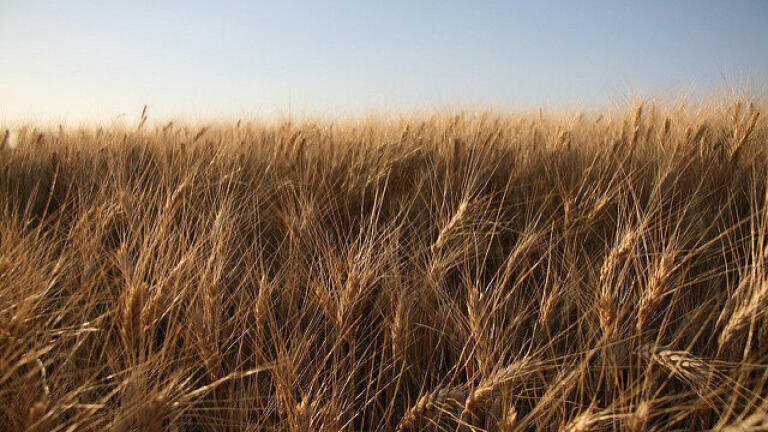
Image via Flickr Creative Commons. Photo credits: Parker Knight
Lab Asia 33.4 - August 2026

 Product directory