Clinical, medical and diagnostics
Researchers have developed ECG2Stroke, a deep learning model that used electrocardiogram data, age and sex to predict stroke risk up to 10 years in advance
A research team co-led by investigators at Mass General Brigham, Boston, USA, and the Broad Institute of Massachusetts Institute of Technology and Harvard University in Cambridge, Massachusetts, USA, has developed and validated an artificial intelligence (AI) model that can predict a person’s risk of stroke up to 10 years in advance from a single 10-second cardiology test.
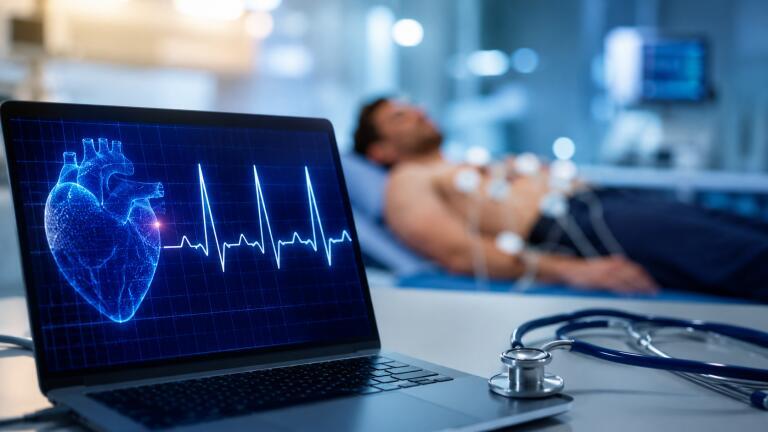
The model – known as ECG2Stroke – used information from an electrocardiogram (ECG), a low-cost, non-invasive test that records the heart’s electrical activity through electrode sensors placed on the skin.
“Existing tools to identify which patients are at the highest risk of stroke often require cumbersome clinical score calculations, are not easily scalable, and are therefore not used widely in routine practice,” said Dr Rahul Mahajan, co-lead author, neurologist with the Mass General Brigham Neuroscience Institute and member of the Broad Cardiovascular Disease Initiative.
To explore a more scalable approach, Mahajan and colleagues developed a deep learning model from patient data at Massachusetts General Hospital. Deep learning is a form of AI that can identify complex patterns in large datasets. In this case, the system was designed to detect subtle waveform features in ECGs that may not be apparent during routine clinical interpretation but may still contain information about long-term cardiovascular and cerebrovascular risk.
The investigators also tested the ECG2Stroke model in patients from Brigham and Women’s Hospital and Beth Israel Deaconess Medical Center both in Boston. In total, information from more than 200,000 patients was used to train and validate the model, which was assessed across different hospitals and patient subgroups.
The results showed that ECG2Stroke, which used only ECG data together with a patient’s age and sex, could consistently predict stroke up to 10 years in the future. Its performance was reported to be similar to that of a validated clinical risk score, while using a test that is already widely available in routine medical practice.
The researchers found that features linked to dysfunction of the atria, the upper chambers of the heart that receive blood returning from the body, had some of the strongest influence on the model’s predictions. This finding suggested that apparently subtle electrical signals from the heart may help to reveal underlying abnormalities associated with stroke risk.
The model was particularly accurate at predicting cardioembolic stroke. This type of stroke occurs when a blood clot forms in the heart, breaks away and travels through the bloodstream to the brain, where it can block blood flow. Cardioembolic stroke is clinically important because – in some patients – it may be preventable with anticoagulant medicines.
“If confirmed after prospective, real-world studies, tools like this could identify which patients should be prioritized for intensive prevention efforts,” said Dr Shaan Khurshid, co-senior author, cardiologist with the Mass General Brigham Heart and Vascular Institute and member of the Broad Cardiovascular Disease Initiative.
“The tool could also be helpful in driving future mechanistic research into abnormalities in the upper chambers of the heart and links to stroke,” Khurshid concluded.
For further reading please visit: 10.1016/j.jacc.2026.03.084
ILM 51.6 Sept 2026



 Product directory
























.jpg)
