Research news
A previously unrecognised protein has been found to protect lung blood vessels, and by restoring levels of the protein bring about reversal in vascular damage and heart dysfunction in preclinical models of pulmonary arterial hypertension
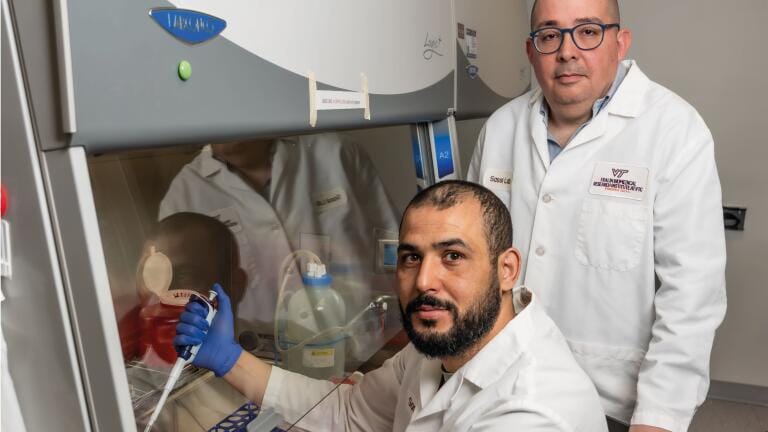
Researchers at the Fralin Biomedical Research Institute at Virginia Tech Carilion (VTC), Roanoke, Virginia, USA, have identified a protective protein that helps to maintain healthy blood vessels in the lungs. Increasing the protein's expression in preclinical models of pulmonary arterial hypertension (PAH) reversed key features of the disease, including pulmonary vascular remodelling and heart dysfunction.
The study found that levels of bone morphogenetic protein 3 (BMP3) are significantly reduced in patients with PAH, a rare and progressive disease that raises blood pressure in the lungs and can lead to heart failure. The research team used two different methods to increase BMP3 levels, and both reversed key features of the disease, including damaged blood vessels and impaired heart function.
The findings have revealed a previously unrecognised pathway involved in PAH and point to novel treatment strategies designed to correct the underlying disease process, rather than simply managing symptoms.
“Pulmonary arterial hypertension remains a devastating disease with limited treatment options,” said Dr. Yassine Sassi, senior author of the study and associate professor at the Fralin Biomedical Research Institute at VTC.
“Most current therapies focus on managing symptoms or slowing disease progression. What makes this discovery exciting is that it identifies a new therapeutic strategy aimed at restoring a natural protective mechanism that is lost during disease,” he said.
Although BMP3 has been studied in relation to bone biology and cancer, this is the first study to identify a role for the protein in PAH.
The researchers found that BMP3 is produced by cells in the walls of lung blood vessels. In healthy lungs, the protein helps to prevent blood vessel cells from growing and spreading too aggressively. In PAH, however, BMP3 levels fall, and the resulting deficiency allows blood vessels to thicken and narrow, which restricts blood flow through the lungs. BMP3 levels are seen to consistently be reduced in lung tissue and blood samples taken from patients with PAH.
To determine whether restoring BMP3 could counteract disease progression, the researchers used both a recombinant BMP3 protein and a lung-targeted gene therapy approach designed to increase BMP3 expression. Both strategies significantly reduced disease severity across multiple preclinical models and improved pulmonary vascular structure and cardiac function.
“This gives us two potential therapeutic paths forward. [First,] a biologic therapy and [second] a gene-based approach, both designed to restore a natural protective signal that is lost during disease,” said Sassi, who is also associate professor with the Virginia-Maryland College of Veterinary Medicine's Department of Biomedical Sciences and Pathobiology.
The team also found that circulating BMP3 levels were significantly lower in patients with PAH which suggested that the protein could eventually serve as both a therapeutic target as well as a biomarker to monitor the disease.
By restoring BMP3 levels, the researchers were able to suppress the cellular changes that drive disease progression and to reverse key features of the disease in preclinical models.
Further studies are needed before the approach can be evaluated in patients. However, the findings identify BMP3 as a promising therapeutic target in a disease for which no currently approved therapy reverses the underlying vascular remodelling.
Sassi and Dr. Aymen Halouani, the study's first author and a researcher at the Fralin Biomedical Research Institute at VTC, have filed a patent application covering BMP3-based therapeutic approaches for PAH.
For further reading please visit: 10.1183/13993003.02146-2025
ILM 51.6 Sept 2026



 Product directory



















,-photo-Karin-Allander.jpg)







.jpg)
