Research news
McMaster University researchers have reported preclinical evidence that a next-generation immunotherapy can target glioblastoma cells to prevent the tumour-supportive environment that leads to disease relapse
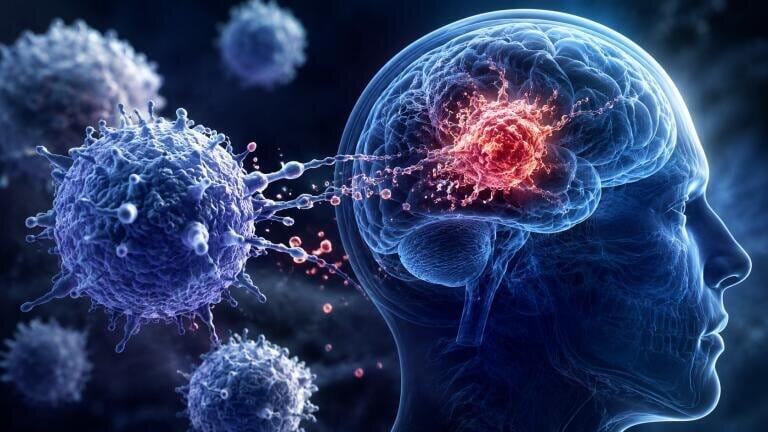
A next-gen cancer therapy under development at McMaster University, Hamilton, Ontario, Canada, has shown early promise as a potential treatment for glioblastoma, the most aggressive and most common primary brain cancer seen in adults.
The preclinical research has shown that its drug candidate could eliminate glioblastoma tumours that typically resist standard treatment. Glioblastoma remains one of the most difficult cancers to treat because it infiltrates other brain tissue, resists conventional therapy and often recurs rapidly after surgery, radiotherapy and chemotherapy.
Researchers said the findings could represent an important advance for a disease that has a median survival time of less than 15 months from diagnosis. Despite decades of research, the standard of care for glioblastoma has changed little and most patients still face a poor prognosis.
“Novel therapies for glioblastoma are urgently needed,” said Dr. Sheila Singh, a professor in McMaster’s department of surgery and the principal investigator on the study.
“The standard of glioblastoma care has remained largely unchanged for more than two decades, and the disease remains uniformly fatal because of it,” she said.
The drug candidate, called a urokinase plasminogen activator receptor chimeric antigen receptor T cell therapy – or uPAR CAR T cell therapy – is an early-stage immunotherapy developed with antibodies created in partnership with scientists at Canada’s National Research Council in Ottawa. CAR T cell therapies are designed to modify a patient’s immune cells so that they can recognise and attack cancer more effectively.
In this case, the therapy reprogrammes immune cells to identify and destroy cells that express urokinase plasminogen activator receptor (uPAR). This protein is found on the surface of glioblastoma cells and has also been detected on nearby support cells that help to sustain tumour growth. By targeting both the malignant cells and elements of the tumour microenvironment, the therapy could have the potential not only to kill cancer cells but also to disrupt the biological infrastructure that enables glioblastoma to persist and return after treatment.
Singh said the work formed part of a wider shift in cancer research, as investigators have increasingly examined uPAR as a therapeutic target in several difficult-to-treat malignancies. Researchers at Memorial Sloan Kettering Cancer Center and Columbia University, both in New York, USA, have also recently focused on uPAR in lung and pancreatic cancers. This broader interest has helped to stimulate collaborative efforts to develop therapies that could potentially be applied across multiple cancers that currently have poor treatment options and outcomes.
Singh, whose work is based at McMaster’s Centre for Discovery in Cancer Research and is supported by NexusHealth – McMaster University’s health innovation accelerator which is based in its faculty of health sciences – with preparations already having begun about how to move the lab-based work into clinical trials.
“This is a very exciting clinical candidate. Our goal is to continue to push this research forward, so that we can translate these preclinical results into first-in-human studies,” said Singh, who is also professor of neuro-oncology and neurosurgery at King’s College London, UK.
Singh’s group has patented the therapy and is working on potential clinical and commercial routes to realise its therapeutic advance. The researchers said further work would be needed before the treatment could enter first-in-human studies but the findings have provided preclinical evidence that uPAR CAR T cell therapy could offer a novel strategy for one of the most lethal adult brain cancers.
For further reading please visit: 10.1126/scitranslmed.aea8381
ILM 51.6 Sept 2026



 Product directory


















,-photo-Karin-Allander.jpg)




.jpg)
