News
Published over 10 years ago. See the latest and most current information on News.
For decades, scientists have battled with history in a bid to uncover how dinosaurs were plummeted into extinction. There are a host of theories, and as of late a giant interstellar dust cloud has been gaining momentum as a popular hypothesis.
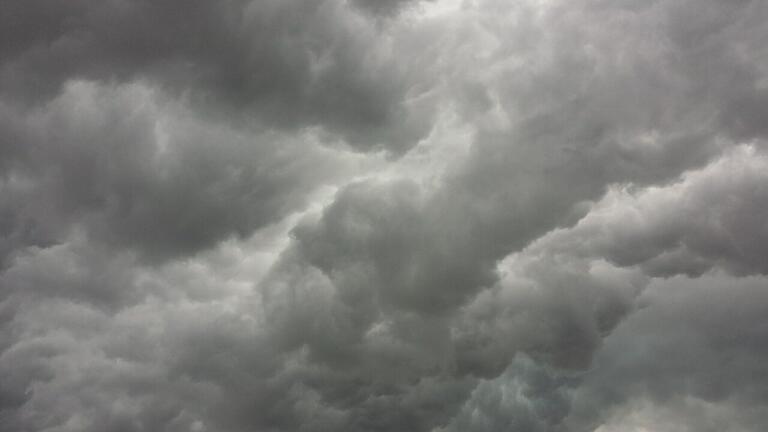
Recently published in the Gondwana Research journal, new research suggests that thick iridium deposits found in the Pacific Ocean could indicate the presence of a huge interstellar cloud that cloaked the Earth millions of years ago. Scientists maintain that the traces of hard silvery-metal could be the remains of a 'Nebula Winter' that blocked out sunlight and starved the planet of warmth. As a result, the dense haze of cosmic dust and gas could have been responsible for wiping dinosaurs from the earth over 66 million years ago.
A team of researchers from the Japan Spaceguard Association put forward the new claims after discovering a 5-metre-thick layer of iridium that cannot be explained simply by asteroid impacts. Instead, they’re putting forward the alternative interstellar dust cloud theory. A thousand times denser than space itself, and measuring in at over 330 light-years in length, they estimate that it could have taken one million years for planet Earth to emerge from the cloud.
During this time sunlight would’ve been unable to penetrate the cosmic veil, while thick deposits of iridium would have amassed on the surface. The ozone layer would have been destroyed, and photosynthesis would’ve ceased to exist. Ultimately, plants, animals and the majority of all other living organisms would have been unable to survive.
Of course, until more evidence is found the theory will remain just that. In the meantime, the scientists are searching for more space-originating radioactive elements in a bid to strengthen their 'Nebula Winter' model.
While the research does offer a fascinating new take on the extinction of dinosaurs, it also fuels debates surrounding the climate change controversy. In a statement, the researchers affirmed that "global climate [is] a more plausible explanation for the mass extinction than a single impact event." For advocates supporting the theory that climate change is a natural process, the research could materialise as fresh new ammunition.
While the interstellar dust cloud is long gone, the concept of such a high impact natural phenomenon is alarming. Light is the life source of existence on planet Earth, and without it organisms would cease to exist. For more insight into just how important the sun is, ‘Bright Lights, Big Science The physical phenomenon that has helped to shape human history and open up our world’ is a fascinating exploration of the story of light itself.
Lab Asia 33.4 - August 2026

 Product directory