News
Published over 11 years ago. See the latest and most current information on News.
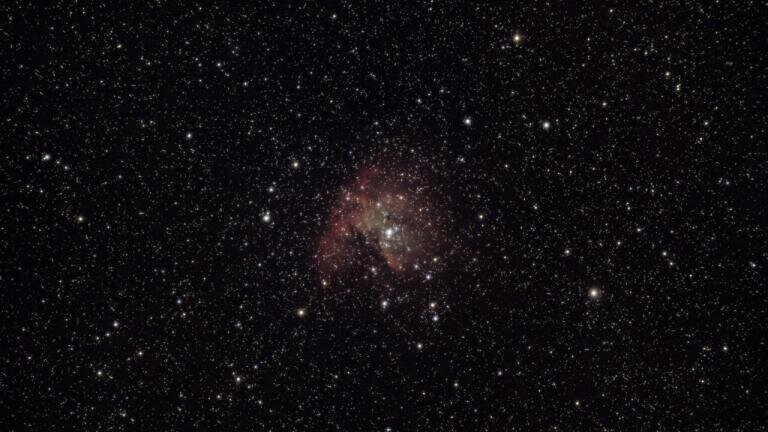
Humans have always had an intrinsic infatuation with the idea that the universe could support other life forms. Now, NASA is one step further to uncovering the truth. In conjunction with other scientists the agency has discovered an intriguing new planet that shares remarkable similarities with Earth. It’s been named ‘Kepler 452b’ and is accompanied by 12 other potentially habitable exoplanets that could be capable of supporting extra-terrestrial life.
John Grunsfeld, associate administrator for Nasa’s mission directorate maintains that the planet is “the closest twin to Earth, or the Earth 2.0 that we’ve found so far in the dataset”.
Seth Shostak is a senior astronomer and Director of the Center for Seti Research, one of the institutions that was involved in the discovery. He maintains that the exciting new revelations about the new planet represent a significant step forward in the goal of determining “what fraction of stars have a world that could support life.” According to Shostak, the numbers could be much higher than originally thought.
“Each one we find helps us to answer the question of what fraction of the sky has planets that are cousins of our own. That fraction is looking pretty promising. It’s not one in a million. It’s not one in a thousand … It may be more like one in two or one in five,” explains Shostak.
While this could terrify some people he admits that it’s an incredibly exciting concept. “Personally, given the line of work I’m in, I think that’s a very encouraging thing,” he says.
So how did scientists manage to delve so deep into the life supporting capabilities of Kepler 452b? At the Seti Institute Shostak and his team use a group of 24 San Francisco based antennas called the Allen Telescope Array. These actively monitor various radio signal frequencies in the search for extra-terrestrial life. Unfortunately the planet is around 1,400 light years away which makes signals hard to pick up. While nothing has yet been confirmed, Shostak is confident that new breakthroughs are on the horizon.
“At this point the inhabitants, if there are any, have remained coy,” he says. “But there are many ways that you can miss a signal, of course. The fact that you don’t pick up a signal doesn’t mean that there isn’t anybody there.”
Want to find out more about the power of telescopes? ‘62nd ASMS Conference on Mass Spectrometry and Allied Topics 15-19 June at the Baltimore Convention Center, Baltimore, Maryland USA’ explores this year’s American Society for Mass Spectrometry conference, with a particular focus on a small exhibit titled ‘Spaceflight MASS Spectrometry 1963 – 2018.’
Lab Asia 33.4 - August 2026


 Product directory