News
Published over 10 years ago. See the latest and most current information on News.
Back in 2014, Matthew McConaughey did a pretty good job of convincing the world that interstellar travel was possible. While his experience was playing out under the close watch of Christopher Nolan, scientists are asserting that interstellar travel could be a reality. So how could this prediction come to light? While nothing is certain, experts have put a number of different possibilities on the table…
One popular concept is to launch a ship large enough to support a sustainable mini civilisation. The ability to grow food, recycle water and raise new generations of astronauts could mean that humans are able to not only reach, but thrive in another solar system.
Pioneered by productions such as ThunderCats, cryogenic freezing-and-thawing technology could emerge as another way for humans to conquer interstellar travel. They’d traverse outside the solar system in suspended animation, then be automatically revived upon arrival. This would also allow for the incubation of seeds, eggs and other organisms. Farfetched? Yes. Likely? Not really? Impossible? Never say never.
One of the major factors holding back space travel is speed. With the development of new fuels comes opportunities to venture faster and further than ever. By replacing conventional chemical-based rocket fuel with next generation nuclear-based fuel, crafts could be propelled by around 1% of mass energy, as opposed to the current 0.001%. Even better, antimatter fuel would offer 100% efficiency, and unimaginable speeds.
Incredibly speculative yet still finding its roots in modern theoretical physics, abstract technologies offer a different kind of hope. For example, the property of quantum entanglement could be used to pioneer transporter technology that instantaneously moves a quantum system to another location, given that its wavefunction exists at both sites. Similarly, warp drives could tap into the concept of bending space time.
Should humans succeed in interstellar travel, life science will undoubtedly play an integral role in the establishment of civilisations. For more insight into this fascinating arena, ‘Light Source Characterisation in Life Sciences’ is an exploratory article that looks at the role of photonics. The science of light has become an important tool in a myriad of life science areas, from biological research and biomedical instrumentation to agriculture and UV disinfection. Success hinges on a deep understanding of the performance of employed light sources, and the ability to manipulate, predict and elicit desired results.
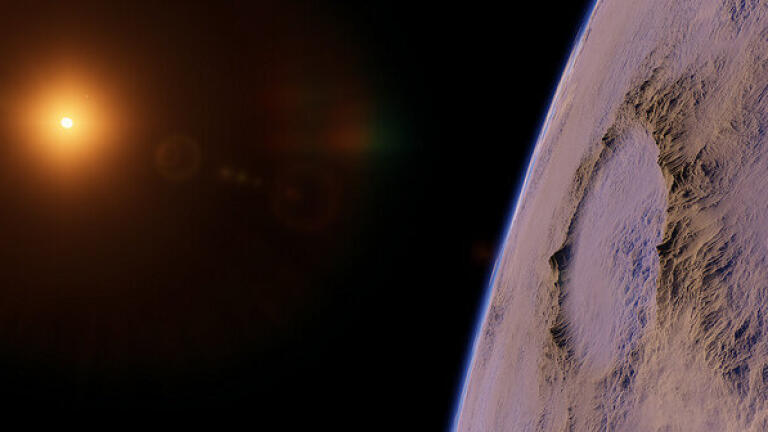
Image via Flickr Creative Commons. Photo credits: etahos
ILM Guide 2026/27


 Product directory