News
Published over 9 years ago. See the latest and most current information on News.
A new initiative to accelerate the use of metabolomics technology to improve safety assessment of chemicals has been launched by The European Centre for Ecotoxicology and Toxicology of Chemicals (ECETOC). Embracing the study of small molecules in biochemical pathways which sustain life by generating energy, or through building larger molecules such as DNA, metabolomics has the potential to transform chemical risk assessment by providing a deeper view of the molecular events underpinning toxicity than is currently possible. However, because it is so new, scientists do not yet have standard procedures for applying metabolomics or reporting its findings, both of which are needed for chemical risk assessment.
The MEtabolomics standaRds Initiative in Toxicology (MERIT) announced by ECETOC brings together a team of international experts to address this problem by defining best practices and minimum reporting requirements when metabolomics is used in regulatory toxicology. It comprises partners from industry, government agencies, regulators and academia, from across Europe and the USA, including the US EPA, US FDA, EFSA, UK HSL, BASF HE, Syngenta, Unilever, Imperial College London, University of Birmingham, VU University Amsterdam and the Metabolomics Society Data Standards Task Group.
Alan Poole, Secretary General of ECETOC explains that “Omics has enjoyed a great deal of success in research. Nevertheless, the use of omics data in regulatory assessment has been hindered by the different approaches to the acquisition and processing of the data which can lead to different outcomes, even from identical studies. By focusing on gene expression and metabolic phenotyping, we can gather significant complementary information on regulatory processes and downstream function – both critical to understanding mechanisms of toxicity”.
Mark Viant, Professor of Metabolomics in the School of Biosciences and co-chair of the new group states said: “We need to address all the roadblocks to translating this highly effective technology of metabolomics into mechanism-based chemical safety science.”
Co-chair Dr Tim Ebbels Reader in Computational Bioinformatics at Imperical College and also co-chair, added: “The MERIT project is a critical step towards that goal.”
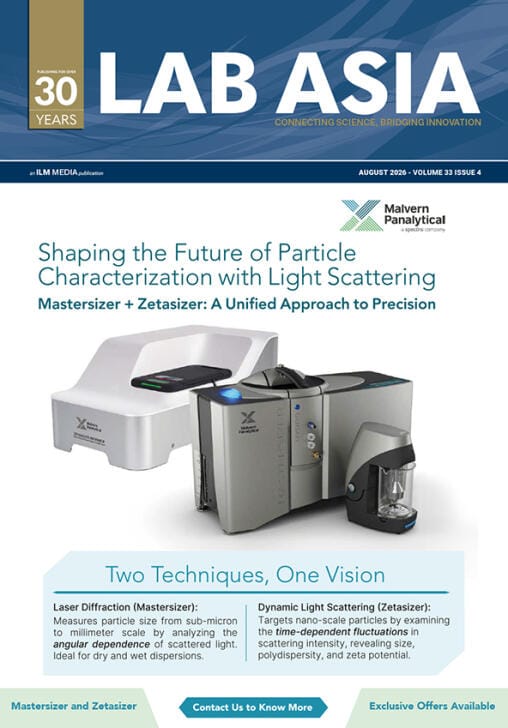
Lab Asia 33.4 - August 2026
 Product directory