News
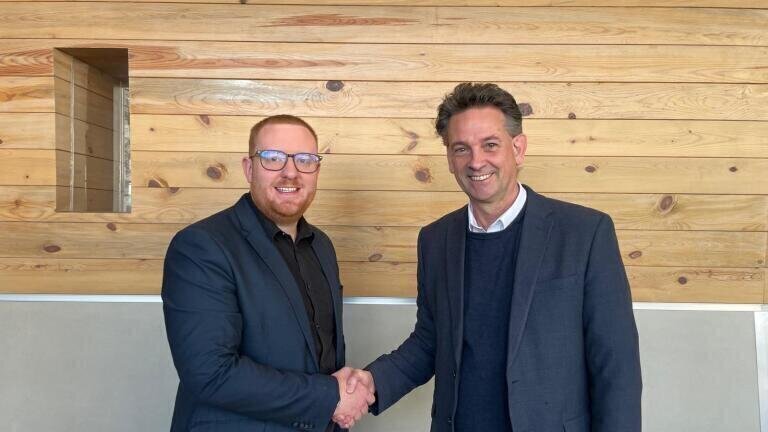
The UK is harnessing the power of high-performance computing and artificial intelligence to fast-track the next generation of battery technologies. The Faraday Institution and The Science and Technology Facilities Council’s (STFC) Hartree Centre have signed a joint statement of endeavour to explore how combining their expertise could accelerate battery innovation and strengthen the UK’s position as a global leader in energy storage.
The partnership aims to develop advanced battery modelling and simulation tools with embedded AI, helping researchers and industry design better batteries faster - from lab bench to market - while supporting the nation’s net zero ambitions.
Dr Kate Royse, Director of the Hartree Centre, said: "By merging our AI and supercomputing know-how with the Faraday Institution’s world-class battery research, we can equip UK scientists and industry with the tools to solve battery challenges faster, more efficiently, and with real-world impact."
Professor Martin Freer, CEO of the Faraday Institution, added: "This collaboration could give the UK a competitive edge in battery research and manufacturing, enabling new technologies to reach the market sooner while strengthening high-tech skills and capabilities across the sector."
Based at Daresbury Laboratory in Liverpool, the Hartree Centre hosts some of the UK’s most powerful supercomputing resources, while the Faraday Institution brings together leading universities and industry partners to tackle energy storage challenges. Together, they plan to offer training, develop exascale-ready battery simulation software, and explore international collaborations to push UK battery innovation further.
This alliance highlights the UK’s ambition to combine cutting-edge computation with materials science, positioning the nation at the forefront of a global race to develop safer, longer-lasting, and higher-performing batteries.
More information online
ILM 51.6 Sept 2026



 Product directory


.jpg)
.jpg)























.jpg)
