News
Published over 11 years ago. See the latest and most current information on News.
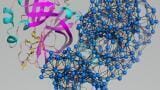
An international project, including scientists at the University of York has found that a recently discovered family of enzymes can degrade resistant forms of starch. Earlier research established that the enzymes – lytic polysaccharide monooxygenases (LPMOs) – are able to degrade hard-to-digest biomass into its constituent sugars. But the enzymes -- which are secreted by both fungi and bacteria – have now also been shown to have the ability to ‘chip away’ at other intractable materials such as resistant forms of starch.
Starch is a polysaccharide that is highly prevalent in both food and plants. Determining the way it is broken down by an LPMO now offers potential for utilising this starch in new ways, potentially including the production of biofuels.
The team, led by Professor Paul Walton and Professor Gideon Davies of the Department of Chemistry at York, also included scientists from France (CNRS Marseille), Denmark (University of Copenhagen) and the UK (University of Cambridge.
Continuing research at York into LPMOs is part of Critical Enzymes for Sustainable Biofuels from Cellulose (CESBIC), a collaborative project funded by the European Research Area Industrial Biotechnology network (ERA-IB).
The paper ‘Structure and boosting activity of a starch-degrading lytic polysaccharide Monooxygenase’ is published in Nature Communications
more information about the Department of Chemistry at the University of York, please visit http://ilmt.co/PL/ezbX
Lab Asia 33.4 - August 2026

.jpg)

 Product directory












,-photo-Karin-Allander.jpg)