
Refrigerators / freezers
Published over 12 years ago. See the latest and most current information on Refrigerators / freezers.
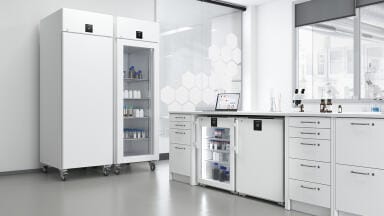
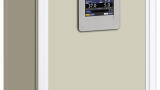
Panasonic has launched a brand new line of -30˚C Biomedical freezers that provide cost-efficient and secure sample storage across a wide range of applications. A combination of technological advances in these new -30˚C freezers reduces energy consumption and improves temperature stability, delivering the effective, reliable environmental control needed when storing valuable materials. The freezers provide effective storage of vaccines and samples for diagnosis in the medical field. They can also be used to store enzymes for genetic research, as well as culture media, reagents and samples for testing. Panasonic’s Biomedical freezers are also ideal for industrial ageing and temperature tests.
Uniform temperature, with less energy
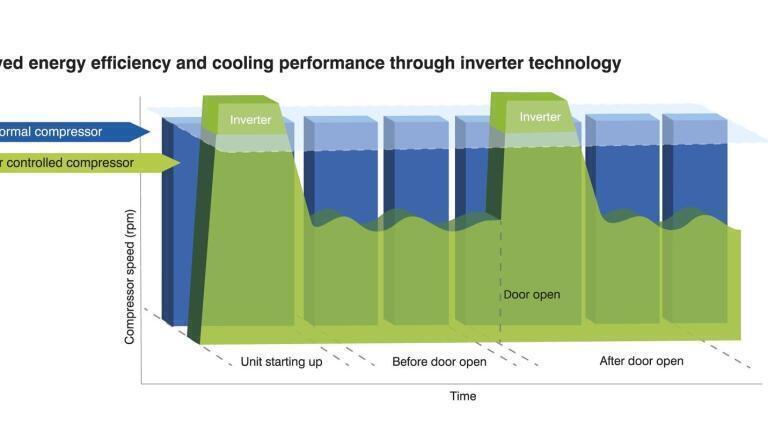
This is the first time that inverter technology has ever been employed in -30˚C freezers. In conventional freezers, single speed compressors maintain the freezer temperatures by cycling on and off. In contrast, Panasonic’s new Biomedical freezers incorporate inverter compressors. These can run at varying speeds, optimising cooling performance under different conditions and ensuring highly reliable, efficient operation. The use of inverter compressors significantly improves the temperature uniformity of the freezer and reduces energy consumption for decreased environmental impact and lower running costs.
Intelligent control
The intelligent control built into these freezers optimises the running speed of the inverter compressor for specific conditions. When the inverter compressor is running normally, it will stay on for longer than a conventional compressor but at a minimal speed. This reduces the power consumption and keeps the internal temperatures stable. However, when the door has been opened, the compressor will run at maximum capacity to bring the temperature inside the freezer back to the set value quickly, after which a normal cycle in resumed.
Natural hydrocarbon (HC) refrigerants also contribute to the low carbon footprint of these new freezers. These refrigerants provide more efficient cooling due to their high latent heat of evaporation. As a result the refrigeration system offers greater energy efficiency and has exceptionally low global warming potential.
Monitoring system conditions
Panasonic -30˚C Biomedical freezers feature Panasonic’s intuitive microprocessor control with an easy-to-read digital display, which delivers comprehensive set point, alarm, monitoring and diagnostic functions to track system conditions and alert users in the unlikely event of temperature abnormalities. In addition, the user-friendly design delivers exceptional convenience and ease of use.
For more information on the new range of Panasonic Biomedical freezers, please visit www.biomedical.panasonic.eu
CMS
Panasonic Biomedical Sales Europe BV
ILM 51.6 Sept 2026





 Product directory