Temperature control and sterilising
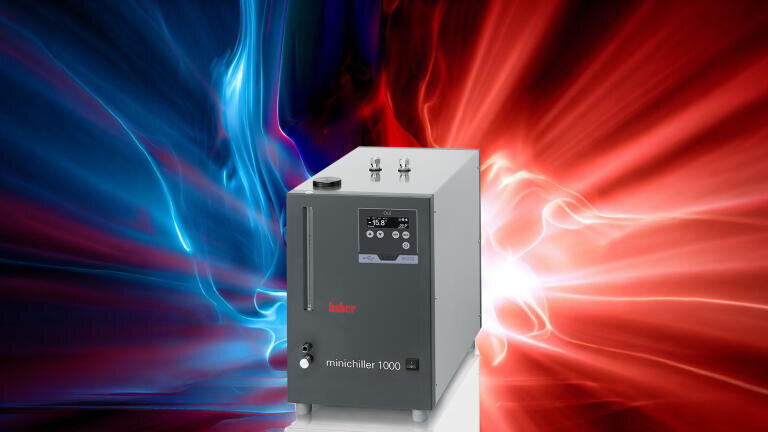
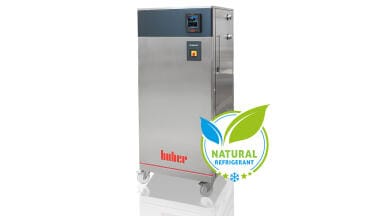
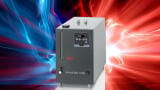
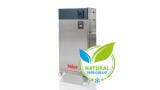
The compact Huber Minichillers are a cost-effective and environmentally friendly cooling solution for numerous laboratory applications. Huber Kältemaschinenbau has now expanded its Minichiller range with three additional, even more powerful models. In keeping with the model designation, the new Minichillers 800, 1000 and 1200 offer cooling capacities of 800, 1000 and 1200 watts at 15°C and yet remain extremely compact.
The new Minichillers are available in air and water-cooled versions, as well as models with integrated heating. This variety of options enables users to select the model that best suits their requirements. All models are equipped with the OLÉ controller as standard, which is easy to operate and well equipped with an OLED display, RS232 and USB. On request, the Minichillers are also available with the Pilot ONE touchscreen controller for even more functionality.
The units only require a small amount of space on the laboratory bench and allow working temperatures from -20°C to +80°C. Consequently, Minichillers are the ideal solution for cooling reactor blocks, vapour barriers, vacuum pumps, rotary evaporators and heat exchangers. Due to the low purchase price, the return on investment in a Minichiller is amortised within a short period of time.
More information online
ILM 51.6 Sept 2026



 Product directory















.jpg)
