Temperature control and sterilising
Published over 12 years ago. See the latest and most current information on Temperature control and sterilising.
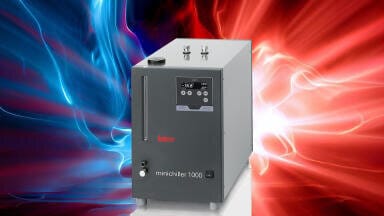
Huber has replaced the MPC circulators with improved models. The units have a redesigned front and are equipped with an RS232 interface as a standard feature. The improved temperature indication of the MPC models provides a continuous resolution of 0.1°C over the entire temperature range.
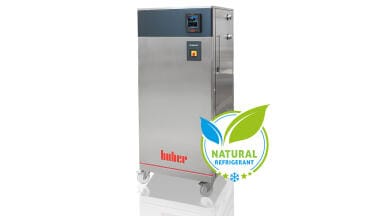
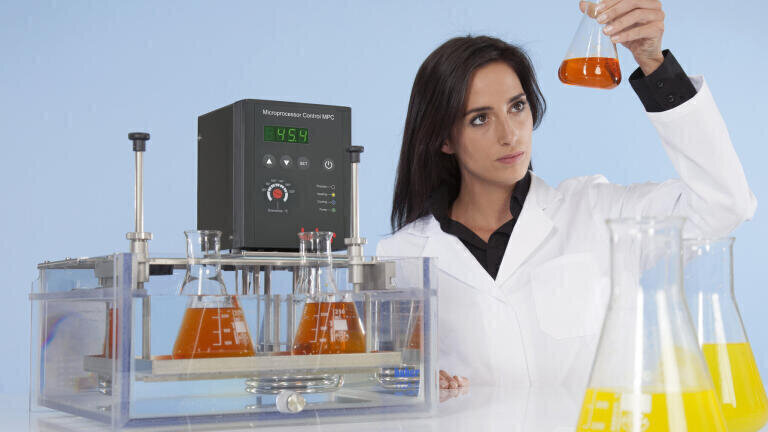
The Huber series of MPC circulators is suitable for many routine laboratory jobs. The favourably priced units are easy to operate and filled with natural refrigerant as a standard. The circulators can be used for example for control of sample temperatures, for material tests, or for external temperature control of measuring instruments and test setups. All models are equipped with an over temperature and sublevel protection according to class III/FL (DIN 12876) and have a temperature stability of ± 0.05 °C. The circulation pump has a capacity of 20 l/min; 0.2 bar (pressure side) or 17 l/min; 0.18 bar (suction side). The product portfolio comprises immersion, circulation, and bath thermostats for max. +200°C and cooling circulators for operating temperatures of up to -30°C. Also offered are a wide range of accessories such as test tube racks, adjustable bases, bath covers, sensors, hoses, and temperature control liquids.
ILM 51.6 Sept 2026




 Product directory