Laboratory products
Published over 16 years ago. See the latest and most current information on Laboratory products.
In some parts of the UK, the majority of sewerage blockages occur due to a build up of Fats Oil and Grease (FOG) from food-related activities, domestic homes and industry. Quantitech Managing Director, Keith Golding, believes that successful management of the problem, through best practices and effective grease interception, can only be achieved when rapid analysis tools are employed.
Drawing on experience in the United States, Keith explains how monitoring can help to ensure that FOG related problems can be minimised, from both point and non-point sources.
Point sources have been the focus of much attention recently; however, combined sewer overflows (CSOs) are a major contributor to non-point source pollution. A recent study in the United Sates showed that FOG blockages account for 50 to 75% of all CSOs [1].
In response to this problem the US EPA, along with city and state agencies, initiated the Capacity, Management, Operation, and Maintenance (CMOM) programme in 2001 to encourage operators of sewer systems to improve maintenance. As an aid to the CMOM program, Water Environment Research Foundation (WERF) funded a report titled ‘Assessment of Grease Interceptor Performance’ [1].
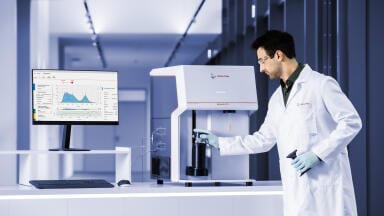
The study evaluated different grease interceptor designs and tested the effluent for FOG levels with a portable infrared oil and grease monitor, the InfraCal TOG/TPH Analyser (see Photo 1) because this enabled rapid onsite analysis.
ILM 51.6 Sept 2026



 Product directory













.jpg)


.jpg)

.jpg)