Laboratory products
How controlled handling and workflow execution can reduce process-related variability
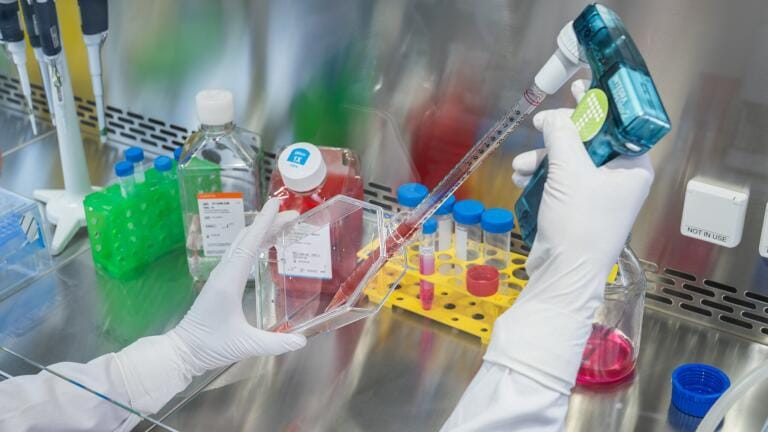
When two cell culture experiments produce different results, one question is often difficult to answer: did the biology change, or did the process? The condition of the cells entering an experiment depends on more than the protocol used that day. It also reflects how the culture was maintained across earlier feeds, passages, and handovers.
Standard operating procedures (SOPs) define factors such as reagents, seeding density, incubation conditions, and passaging schedules. They cannot describe every physical detail of execution. Two experienced scientists may follow the same procedure correctly yet differ slightly in precise timing, handling technique, applied force or speed, or the interpretation of qualitative instructions. These differences do not imply poor technique, but they can make the process harder to reproduce and reconstruct.
Cells respond continuously to how they are maintained and handled. Small differences in mixing, detachment, liquid handling, or the timing of individual steps may appear minor when considered as isolated events. Repeated across several passages, these events become part of the cell culture history and can influence the starting population used for a downstream experiment.
Retrospective troubleshooting is difficult because routine documentation usually confirms that a step was completed, but not precisely how it was performed. Exact timings, handling details, pauses, and handovers may not be recorded. By the time an unexpected result appears, the relevant event may have occurred days earlier.
The operational challenge becomes more visible as cell culture activity grows. Additional projects bring more cell lines, flasks, schedules, operators, and handovers. Scientists must coordinate feeding, media exchange, passaging and harvesting with experimental preparation, data analysis and troubleshooting. Because maintenance follows the needs of the cells, it does not always fit neatly into the working day. Scaling a predominantly manual process therefore increases more than hands-on time. It also increases training needs, documentation effort, and the number of transitions at which handling may differ. An SOP remains essential, but protocol control alone does not ensure that the same physical process occurs across users, days and shifts.
A robust cell culture process has three distinct layers. The protocol defines what should happen. Controlled execution defines how the physical steps are performed. Traceability documents record what occurred during a specific run. Strengthening controlled execution and traceability does not replace the SOP; it supports more consistent execution of the SOP in practice.
This distinction also provides a useful standard for automation. Researchers should continue to choose the cell line, culture strategy, process parameters, and acceptance criteria. An automated system can then control repetitive liquid transfers, timings, movements, and transport steps while recording the run. The objective is to make routine execution a less likely source of unexplained variation, allowing biological differences to be interpreted with greater confidence.
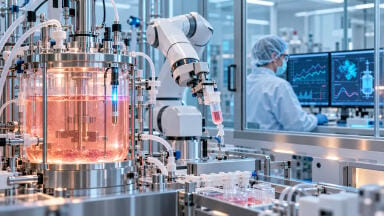
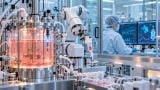
Cell Care FLASK was developed to automate selected maintenance workflows for adherent and suspension cultures in T175 and Triple Flask formats [1]. Users configure feeding, media exchange, passaging, seeding, and harvesting workflows through predefined, adaptable templates. Two FlaskMotion Units perform controlled flask positioning, liquid addition, tilting, mixing, and transfer. MagPearl® technology connects reagent bottles, tubing and flasks through magnetically actuated interfaces, creating a closed fluid path during processing.
Temperature-controlled storage accommodates up to 16 flasks, and a shuttle moves them between storage and the processing positions. The operator loads cultures from the laboratory incubator and returns them after the run. Automated feeding, passaging and harvesting can free up to 2.5 hours of hands-on time per run, depending on the workflow, flask count and scheduling.
The time saved when using Cell Care FLASK gives you more capacity for experimental design, data interpretation, and troubleshooting, while reducing the need to coordinate repetitive maintenance steps across a work day.
Barcode-supported flask identification, action histories, progress monitoring, and detailed run reports provide a clearer account of execution than manual confirmation alone. These records can support comparisons between runs, simplify handovers, and provide a more useful basis for investigating deviations. Biological performance must still be assessed for the relevant cell line and application using criteria such as morphology, viability, growth, and cell yield in comparison with the established manual process.
The importance of defined upstream handling increases as biological models and downstream assays become more sensitive. The US Food and Drug Administration’s 2026 draft guidance on new approach methodologies highlights technical characterisation, documentation of cell culture conditions, and the identification of process steps that may introduce assay variability [2]. The NIH Standardised Organoid Modeling Center emphasises reproducibility, benchmarking, and comparability across laboratories [3].
These initiatives extend beyond routine T-flask maintenance, but they reinforce the same scientific principle. Confidence in complex biological data depends on understanding the processes that preceded measurement. Biological variation remains essential information. More consistent handling makes it easier to evaluate that information without avoidable differences in routine execution becoming a competing explanation.
A written protocol is the starting point for consistent cell culture. Timing, liquid handling, flask movement, documentation, and handovers determine how the protocol is translated into practice. Treating these factors as elements of process design provides a stronger basis for interpreting experimental results.
Cell Care FLASK keeps scientific decisions with the researcher and makes routine execution more defined, repeatable, and traceable. When results differ, laboratories have a better foundation for determining whether the explanation lies in biology or in the process that preceded it.
More consistent cell culture. More time to focus on biology.
Discover Cell Care FLASK:
https://www.hamiltoncompany.com/cell-care-flask
1. Hamilton. Cell Care FLASK Automated T Flask Handling. Accessed September 2026. https://www.hamiltoncompany.com/cell-care-flask
2. US Food and Drug Administration. General Considerations for the Use of New Approach Methodologies in Drug Development. Draft Guidance for Industry. March 2026.
https://www.fda.gov/media/191589/download
3. National Institutes of Health. NIH Standardised Organoid Modeling SOM Center. Accessed September 2026. https://www.nih.gov/som
ILM 51.6 Sept 2026

 Product directory