Laboratory products
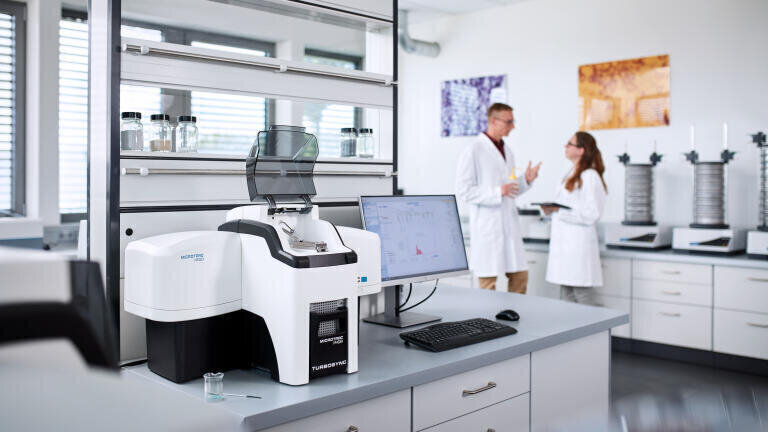
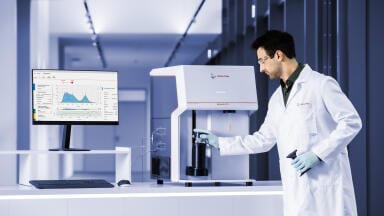
Today’s laboratories work in a new mindset. Turnaround times are shorter, workloads are higher, yet every result must be precise, accurate and fully traceable.
Verder Scientific supports this daily reality with application-driven workflows that help labs move quickly without compromising quality. As part of the globally active Verder Group, we combine a worldwide network of subsidiaries, distributors and manufacturing sites to serve customers locally while sharing expertise internationally.
From sample preparation and particle characterisation to heat treatment, elemental analysis, materialography and pharmaceutical testing, our goal is simple: to give you tailored solutions that fit your application, so your lab can stay fast, reliable and ready for the next challenge.
Within Verder Scientific, specialised brands cover key steps along the customer needs:
• Carbolite for heat treatment: furnaces and ovens for drying, debinding, calcination, ashing, sintering, high-temperature and controlled atmosphere processing
• ELTRA for elemental analysis: fast determination of C, H, N, S, O and related parameters from different sample matrices
• QATM for materialography & hardness testing: preparation and testing of metals, coatings, welds, components as well as battery parts, micro-electronics and geological samples.
• Retsch for milling & sieving: sample homogenisation and particle size reduction from fragile pharmaceuticals to tough building materials
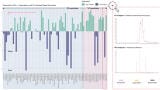
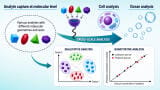
• Microtrac for particle & pore characterisation: particle size and shape (wet/dry), dynamic and static image analysis, zeta potential and colloidal stability, surface area (including BET), pore geometry models, porosity and true density via gas adsorption and pycnometer
• Erweka for pharmaceutical testing: dissolution, disintegration, hardness, friability and powder testing for solid dosage forms
All these competencies are concentrated within one group. This means you can discuss milling, surface area, stability, heat treatment and tablet testing with a close network of specialists who understand how the steps connect. The result is a professional support from experts who live in these applications every day.
“Materials for the Future: From Battery Innovation to Aerospace-Grade Performance” Thursday 26th March 2026 – 11:00 PM
This talk highlights how advanced sample preparation, heat treatment, particle and pore characterisation and materialography support the development of new materials, from high-performance battery components to demanding aerospace applications.
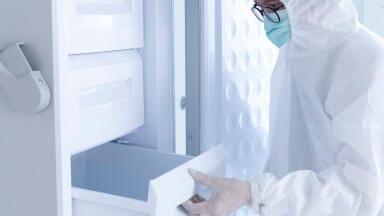
In pharma and biotech, every deviation has a cost. Raw material variability, insufficient understanding of particle properties or limited stability data can quickly lead to investigations and delays. Verder Scientific helps keep critical material attributes under control from development to routine QC.
Erweka systems cover dissolution, disintegration, friability and hardness testing in line with major pharmacopoeias, with options for autosampling and online UV/UV-Vis or HPLC to streamline release and stability testing. Powder testers complement this by characterising flowability, cohesion, compressibility and density, so issues like capping or lamination can be traced back to measurable powder behaviour.
Microtrac solutions provide particle size and shape analysis from nanometer to millimetres, helping you link PSD and morphology to flow, blend uniformity and dissolution. Zeta potential and stability measurements characterise suspensions and nano-dispersions without waiting for long storage trials, while gas adsorption systems deliver BET surface area, pore size distribution and true density for APIs and excipients that rely on well-defined surface properties.
Retsch mills and sample dividers ensure representative, reproducible sample preparation of APIs and excipients, including cryogenic grinding for temperature-sensitive materials and sieving for particle size checks. High-energy mixer and ball mills also support co-crystal screening and mechanochemical synthesis as solvent-free routes to new solid forms.
“Once we could see how particle size, surface area and tablet hardness all fitted together, troubleshooting went from weeks to days,” as one development scientist summed it up. That’s the effect of having Erweka, Microtrac and Retsch data telling the same story.
Food and beverage labs face some of the most demanding samples: fatty, sticky, fibrous, frozen or highly heterogeneous. Still, results must be comparable day after day.
Retsch mills and homogenisers handle roasted coffee, cocoa, chocolate, nuts, cereals, meat and plant materials. Cryogenic and knife mills such as the GRINDOMIX GM 200 are widely used in food labs to homogenise samples with high fat, water or sugar content without changing the analytes of interest.
“We finally stopped fighting with our fatty meat blends. The GM 200 turns them into a perfectly homogeneous paste in seconds,” reported a QC manager in a meat processing lab.
For coffee and cereals, controlled grinding and sieving allow you to correlate particle size distribution directly with extraction behaviour and sensory properties, making quality discussions more objective.
ELTRA analysers support nitrogen-based protein determination in milk, dairy powders, cereals and meat, while Carbolite furnaces are used for ashing and loss-on-ignition to determine mineral content and verify recipe compliance. Together they provide reliable data for nutritional labelling and process optimisation.
Microtrac instruments measure particle size and shape in powders like coffee, cocoa and powdered milk, and evaluate density and solids content in liquid products. Stability analysers quantify creaming, sedimentation or phase separation in juices and plant-based drinks where vegetable proteins act as natural emulsifiers, helping you design clean-label products with predictable shelf life.
Battery performance and safety are shaped at every step, from ores and graphite to electrode slurries, cells and recycled fractions. Verder Scientific brings multiple tools together along this chain.
ELTRA elemental analysers determine O/N/H in metal powders, C/S in graphite and sulphur in battery-grade copper, supporting tight control of purity.
Retsch crushers and mills prepare ores, silicon and solid electrolytes for XRF, XRD and elemental analysis, and enable mechanochemical synthesis of novel materials. Carbolite furnaces handle calcination of cathode precursors, thermal purification of graphite and controlled-atmosphere treatments for solid-state electrolytes and lithium ores.
For electrode powders, Retsch ball mills with temperature control support homogenisation of mixes and slurry preparation; sieving provides particle size analysis of active materials and conductive additives.
Microtrac systems then measure particle size and shape, slurry stability, surface area, pore size distribution, porosity and true density. This allows engineers to directly link powder properties to coating behaviour, electrode wetting and ageing performance.
QATM materialography and hardness testing solutions let you study electrode cross-sections, collector foils, welds and casings, revealing mechanical weak points before they turn into failures.
For cell and pack analysis, QATM equipment is used to cut, mount and polish batteries for failure analysis. In recycling, Retsch crushers and mills pre-crush spent cells; sieving separates fractions; Carbolite furnaces thermally treat carbon-rich material and recovered powders; and Microtrac online particle analysers monitor particle size distributions during recovery.
“Capturing Tomorrow: Scientific Solutions for CCUS and Carbon Pathways Across the Verder Group” Wednesday, 25th March 2025 – 2:30 PM
Here we will focus on carbon capture, utilisation and storage (CCUS) and related carbon pathways. The presentation will show how analytical solutions from across the Verder Group help characterise biochar, sorbents and other porous materials, as well as manage thermal and analytical workflows for biomass and waste streams.
Sustainability projects often start with one simple question: what is really inside this material? Accurate answers depend on robust preparation and analysis.
Biomass residues can be converted into biochar using Carbolite furnaces under controlled pyrolysis conditions, while Retsch mills prepare both feedstock and biochar for analysis. Microtrac gas adsorption and porosimetry systems characterise surface area and pore size distribution, which are critical for CO₂ adsorption and long-term carbon storage.
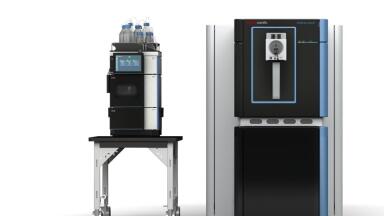
One materials scientist working on microporous zeolites in Carbon Capture area put it simply: “With BELSORP MAX we finally saw the full micropore structure and could tune our synthesis accordingly.” Instruments like BELSORP MAX X and MAX G are designed exactly for this type of high-precision surface and pore analysis.
In cement and construction, high-energy Retsch mills support mechanochemical activation of supplementary cementitious materials and alternative binders for ‘green cement’ with reduced clinker content. Microtrac particle characterisation helps optimise particle size and shape for flow and strength, while ELTRA and Carbolite link composition and thermal behaviour to durability.
For other waste streams such as glass, rubble, textiles and batteries, Retsch crushers and mills ensure representative test portions; ELTRA, Microtrac and QATM then close the loop with elemental, particle and mechanical characterisation of recycled fractions, supporting reliable decisions on reuse and recovery.
Whether you are qualifying a new API, stabilising a plant-based drink, extending battery life or proving the value of recycled materials, the question is the same: can you trust your data enough to act on it?
By combining milling & sieving, particle and pore characterisation, heat treatment, elemental analysis, materialography and pharmaceutical testing, Verder Scientific offers integrated, application-driven solutions from a single expert partner.
That means fewer interfaces, smoother validation, shorter troubleshooting time and a support team that understands both the instruments and the applications behind them.
In this way, every grind, every stability curve and every dissolution profile becomes more than just a number: it becomes a decision you can stand behind, and a small but important step toward safer medicines, better food, more efficient batteries and more sustainable use of our resources. We enable progress.
ILM 51.6 Sept 2026



 Product directory













.jpg)

.jpg)
.jpg)