Chromatography
Published over 15 years ago. See the latest and most current information on Chromatography.
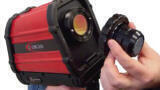
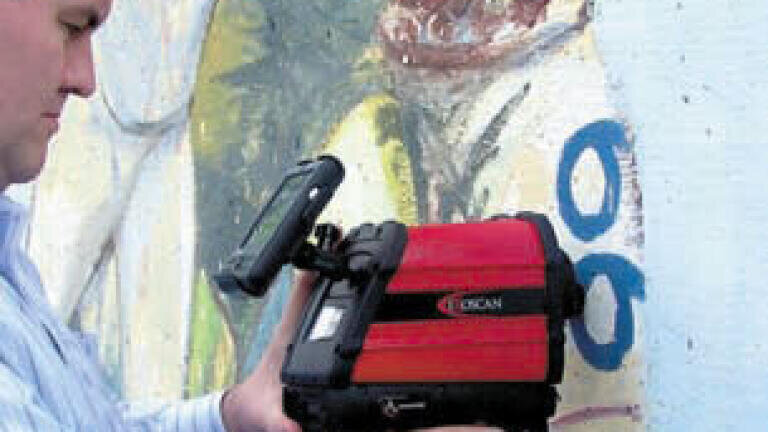
A2 Technologies handheld Exoscan FTIR spectrometer, equipped with new, interchangeable spherical internal reflection (ATR) and diffuse reflection sampling interfaces is gaining rapid acceptance with scientists and researchers involved the conservation, restoration and authentication of art and historical objects. The technology is currently being used to analyse a wide range of priceless objects including fine art, murals, illuminated manuscripts, historic photographs, ancient pottery, statuary, tapestries, tiles and mosaics.
The proven high performance of the Exoscan system, the ability to rapidly change sampling interfaces to meet the need of the analysis, and the extremely compact size of the system has proven to be a major advantage for the study of these objects. The hand held Exoscan FTIR system can be used equally effectively in lab environments and in the field, enabling researchers to bring the spectrometer to the object, or to the site of the object. The system can be used in any orientation and has on-board lightweight power source. FTIR is inherently a nondestructive analysis method and the ability to bring the analyser to the sample means that even small sample particles need not be removed for analysis. For samples that must not be touched during analysis, non-contact reflection sampling interfaces are available.
The Exoscan technology is capable of identifying natural and synthetic organic and inorganic pigments, colourants and dyes, siccative binders, lacquers, resins, coatings, adhesives and fibres. The system is being used for determining the effect of aging including damage caused by UV, thermal and environmental pollution and supports the cleaning and restoration processes for these rare and historical objects.
Mr Graham Miller, President of A2 Technologies, commented: “The compact size, excellent performance and sampling versatility of the Exoscan system are having a significant impact in the field of art and historical object restoration and conservation. The ability to take FTIR spectroscopy to the object, even at a field site, is important and the non-destructive nature of FTIR can be fully exploited with a portable system. A2 is delighted that a number of the most prestigious institutions involved in these efforts have recognised the value of handheld, field ready FTIR spectroscopy.”
ILM 51.6 Sept 2026



 Product directory