Clinical, medical and diagnostics
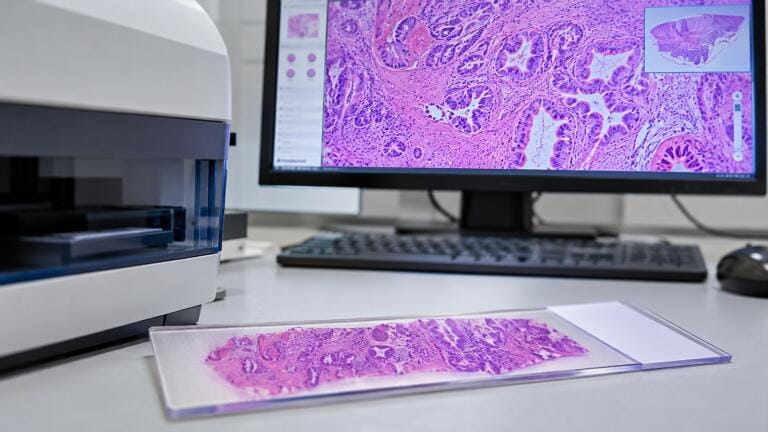
Supplier guidance on procurement and standards, a short-term outsourcing contract in Wales and an NHS-developed staining control headed for market show where digital pathology adoption is getting stuck.
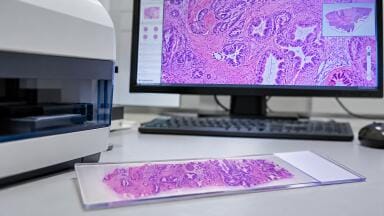
AXREM’s digital pathology group has published two guidance documents for NHS organisations planning, buying and deploying digital pathology systems.
AXREM is the UK trade association for suppliers of diagnostic imaging, radiotherapy and healthcare IT equipment. The papers were published in November 2026.
Digital Pathology Interoperability: Definition, Standards and Regulatory Alignment sets out the standards and governance needed to share whole slide images, metadata and clinical information. It backs DICOM, SNOMED CT, HL7 FHIR and standards-based APIs, and argues for vendor-neutral environments that connect pathology with radiology, genomics, oncology and electronic patient records.
Procuring a Digital Pathology Solution Clinically Fit for Purpose calls for clinically led procurement built on six pillars. These cover scalability, storage and performance; workflow integration; business continuity; workforce usability and human factors; infrastructure; and data portability and exit strategy.
Sally Edgington, Chief Executive of AXREM, said interoperability “is no longer a desirable feature, it is a fundamental requirement”.
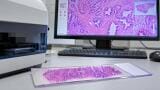
Capacity remains a pressure point. Swansea Bay University Health Board will outsource digital pathology services from November 2026 to March 2027 in a contract worth £400,000. Health technology news site HTN reported that the contract went to Stockport-based Business and Service Solutions Ltd through a framework agreement without competition.
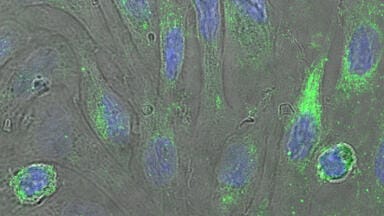
Upstream, staining consistency is a known obstacle to AI. In August, Leeds Teaching Hospitals NHS Trust signed a commercial agreement with Epredia for TANGO, a quality-control tool developed with the National Pathology Imaging Co-operative. It uses a reference slide to check staining runs, reducing variation that can affect how results are read and limit AI tools.
Epredia plans to integrate TANGO into new laboratory slides from late 2026.
Lab Asia 33.6 Dec




 Product directory