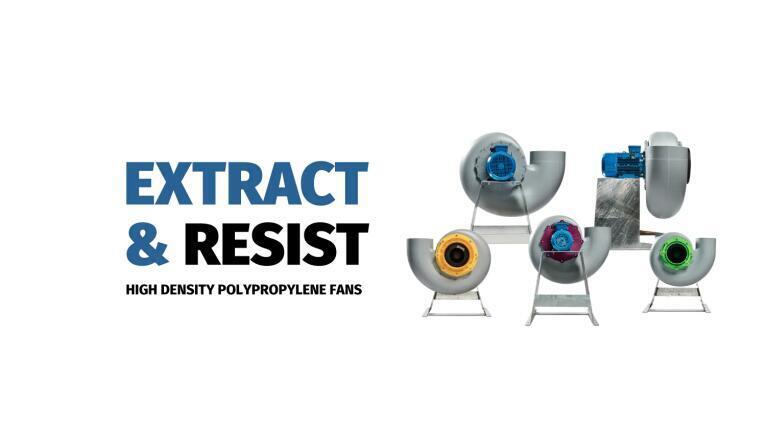


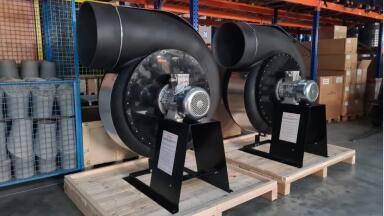
Fume extractors
You're responsible for a lot. Compliance sign-offs, equipment maintenance, staff safety, energy targets, the list doesn't stop. And somewhere in the middle of all of that sits your fume extraction system, quietly running in the background, except when it isn't quiet, or when it isn't running properly. And by the time you notice, the problem is usually bigger than it should have been.
Fume extraction is one of those areas that gets underestimated and ignored until something goes wrong. A fan that's been incorrectly specified. Ductwork that's creating more resistance than anticipated. A system that was right for the lab five years ago but hasn't kept pace with how the space is being used or how ductwork has scaled today. These are the everyday reality for lab managers dealing with systems that were specified by someone else, commissioned years ago, or simply never reviewed with a critical eye to ensure it keeps up.
And the consequences aren't abstract, they’re real. Inadequate extraction means chemical fumes can accumulate in the workspace. That's a direct health risk for your team. Beyond safety, an undersized or incorrectly configured fan puts unnecessary strain on the system, drives up energy costs, and increases the likelihood of unplanned downtime at exactly the wrong moment. Overcorrecting, choosing a fan that's oversized or over-specified, isn't a safe bet either. It inflates procurement costs, consumes more energy than necessary, and can create noise levels that make the working environment genuinely unpleasant.
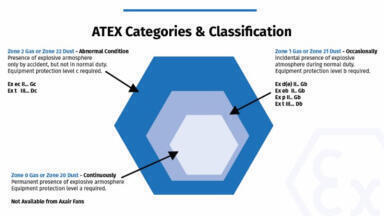
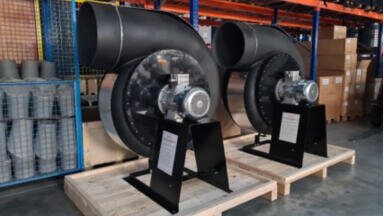
Getting fan selection right isn't just a procurement decision. It's a technical one, and it requires understanding several variables that may sit outside of your specialism. The airflow your system needs, the static pressure required to move air through your specific ductwork configuration, the chemical compatibility of fan materials with what you're extracting, or whether your environment requires ATEX-rated equipment for potentially explosive atmospheres. Miss any one of these, and you're either under-protected or over-spending, sometimes both.
There's also the energy conversation, which is becoming harder to ignore. Laboratories are among the most energy-intensive environments in the UK, consuming between four to six times more energy per square metre than a standard office. A significant portion of that comes from ventilation. If you're working towards BREEAM targets, net zero commitments, or simply trying to reduce operational costs, your fume extraction fans are a practical place to start. Switching to EC motors with IE5 efficiency ratings can reduce fan energy consumption by up to 20%, and in many cases, retrofitting is more straightforward than it sounds.
None of this requires you to become a fan engineer. But it does require you to ask your suppliers better questions, to understand what a correct specification looks like, and to know when your current setup might be falling short. Whether you're reviewing an existing system, managing a refurbishment, or specifying from scratch, having a solid grasp of the fundamentals puts you in a much stronger position, with contractors, with consultants, and with the people responsible for sign-off.
That's exactly what Axair's fume extraction white paper is designed to help with. Written for people who need practical, working knowledge rather than a textbook, it covers everything from pressure types and ATEX requirements to performance curves, fan handing, orientation, chemical compatibility, and real-world application examples. It's the kind of reference that’ll set you up to feel in control of your fume extraction system set up.
Download the white paper today and make sure your fume extraction system is working as hard as it should be.
More information online
ILM 51.6 Sept 2026



 Product directory





















.jpg)
