Laboratory events news
Roche researchers have set out how patient-derived organoids, automation and high-content imaging have combined within the Institute of Human Biology to create a scalable, human-relevant screening platform aimed at improving translational decision-making in drug discovery
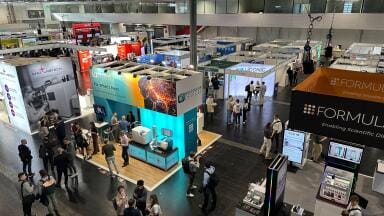
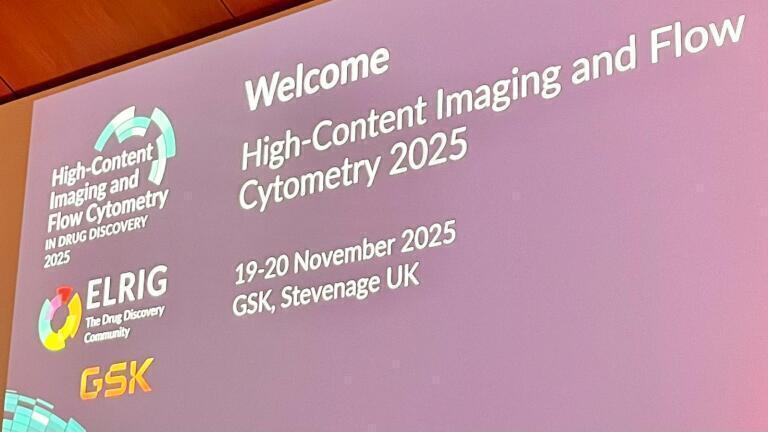
Héloïse Mary, senior research associate and lab manager at Roche, set out how the organisation is building organoid capacity within its Institute of Human Biology at the ELRIG 2025 meeting at GSK’s Stevenage campus on 19–20 November 2025. She described how her team has established an end-to-end pipeline to support high-throughput, image-based compound screening in patient-derived organoid models. In her presentation she detailed how many late-stage drug discovery failures reflect a persistent mismatch between the biological complexity of human disease and the simplifications imposed by widely used preclinical models. Roche has invested in organoid technologies therefore to reduce this mismatch by introducing more physiologically relevant and genetically diverse human model systems earlier into discovery and translational decision-making.
She framed the challenge through the familiar attrition funnel of drug discovery. Although discovery programmes begin with many potential targets and molecules, only a small fraction ever advance to clinical testing and fewer still reach patients. Established modelling systems continue to deliver valuable insights but impose structural constraints. Animal models can fail to reproduce key aspects of human physiology and genetic diversity. Conventional human cell lines – while both convenient and scalable – typically represent a single cell type and may drift away from the tissue context that shapes disease phenotypes and drug responses. Other in vitro systems can add complexity but still fall short of recapitulating whole-organ behaviour. Against this background, organoids have emerged as a means to move closer to human biology while retaining experimental control and scalability.
Mary described organoids as three-dimensional, self-organising cellular models derived from patient tissues or from induced pluripotent stem cells. Their value lies in an ability to preserve defining features of the tissue of origin, including cellular composition, spatial organisation and inter-patient variation. Because the Institute of Human Biology frequently works with patient-derived material, its organoid collections capture genetic diversity across individuals. This diversity matters when drug response varies according to mutation status, background genetics, age and other clinical factors. She emphasised that such models could support disease modelling, drug testing and hypothesis generation, while offering a bridge between early discovery and proof-of-process studies.
Within the institute, organoid research has spanned multiple tissue systems, with particular emphasis on the digestive tract. Mary described intestinal organoids derived from different regions alongside related gastrointestinal models, as well as organoid-on-chip approaches that introduce microphysiological control, perfusion-like conditions or tissue interfaces. Beyond gastrointestinal systems, the portfolio has included pancreatic organoids and stem-cell-derived models designed to recapitulate aspects of development, including neural systems such as retina and brain. The overarching aim, she said, has been to assemble a broad and expanding set of platforms to support drug discovery, development and patient stratification.
The core of her presentation focused on converting these complex biological models into a practical screening workflow. Mary presented the platform as an internal service and collaborative pipeline in which scientists bring a biological question and an organoid model, and the platform helps to transform that model into a format suitable for screening at scale. Miniaturisation represents a critical early step. Many groups culture organoids in low-throughput formats that do not support screening, so the platform adapts conditions to enable robust growth in 96-well or 384-well plates while maintaining reproducibility. Expansion, banking and standardisation are essential, because screening depends on consistent starting material and the ability to scale from limited patient biopsies.
She outlined several enabling technologies that support this transition. The team has used compact expansion systems to grow organoids efficiently and to build a biobank capable of supplying screening campaigns. Once cultures reach readiness, the workflow moves to automated handling. Mary described a fully automated liquid-handling system with integrated plate handling, dispensing and media exchange. Automation, she argued, has helped not only to increase throughput but also to reduce variability across plates, batches and operators.
High-content imaging has served as the principal assay endpoint. Mary highlighted the challenge that organoid imaging generates extremely large datasets that can rapidly exceed storage and analysis capacity. To address this, the platform has developed an imaging framework that standardises data capture, organises storage and enables computational processing and feature extraction through high-performance computing. Developed in collaboration with the BioVision Center in Zurich and drawing on the open-source Fractal ecosystem, the framework follows FAIR data principles to ensure that data remain ‘findable, accessible, interoperable and reusable’.
Operationally, the framework ingests images from multiple acquisition devices with appropriate metadata, executes pre-processing steps such as stitching and illumination correction, and performs data reduction operations to limit storage requirements while preserving biologically relevant signal. For users, much of this complexity resolves into a simplified interface that allows execution of standardised scripts rather than bespoke pipelines.
Following pre-processing, the workflow proceeds to segmentation and feature extraction at both whole-organoid and single-cell levels. The framework can quantify morphology, size, shape descriptors and marker-based features, depending on assay design. Mary presented this capability as a way to avoid manual review across large screens while retaining analytical flexibility to interpret phenotypes and link image-derived signatures to biological hypotheses.
She then described a typical screening campaign which begins with compound libraries designed around pathways or mechanisms of interest. After treatment, imaging proceeds in a staged manner to reduce unnecessary data collection. Low-magnification imaging identifies organoid positions, followed by higher-magnification acquisition only at those coordinates reducing imaging time and data volume.
As an illustration, Mary presented an ongoing study in colorectal cancer liver metastasis using 11 patient-derived organoid lines paired with basic clinical context. The team applied standard-of-care chemotherapy alongside a broader compound panel. Early characterisation used an EdU incorporation assay to measure proliferation, revealing marked inter-patient heterogeneity in response.
Some organoids retained proliferative cells after treatment while others showed extensive cell death. The team extended this analysis through antibody panels and clustering approaches across a total of 350 compounds. Although biobank characterisation was complete, Mary noted that compound-response analysis across patients, organoids and single cells remains ongoing and analytically demanding.
She concluded that organoids, when paired with automation, high-content imaging and robust computational pipelines, can render human-relevant biology tractable at screening scale. The principal challenge lies not only in organoid culture but in the engineering required to standardise, miniaturise and analyse these systems so that discovery teams can deploy them routinely without rebuilding infrastructure for each programme.
ILM 51.6 Sept 2026



 Product directory












.jpg)
.jpg)