Laboratory events news
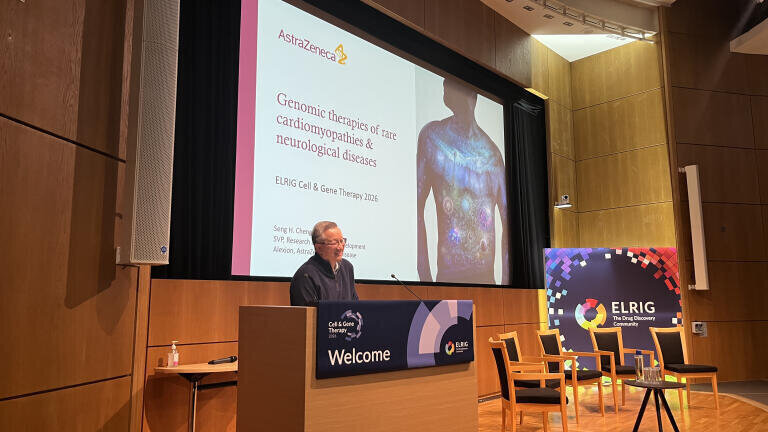
Speaking at the ELRIG meeting at Hinxton Hall in March, Dr Seng H. Cheng set out how next-generation adeno-associated viral vector engineering has begun to move gene therapy beyond early proof-of-principle successes, with platform advances that may improve delivery to the brain and heart and widen the reach of treatment for rare genetic diseases
Rare disease has remained one of the clearest settings in which to develop genetic medicines, according to Dr Seng H. Cheng, senior vice president for research & product development at AstraZeneca’s rare disease unit Alexion, who outlined a platform-based strategy to extend gene therapy into organs that have proved difficult to treat. He suggested that many rare disorders provide strong biological and clinical justification because they have a defined genetic cause, with a comparatively well characterised mechanism and present an ongoing and substantial burden on patients, families and healthcare systems.
Cheng presented gene therapy not as a narrow speciality but as a scalable therapeutic platform with potential to deliver durable benefit across multiple disease areas. He suggested that the field has moved beyond the need to demonstrate that gene transfer can work in principle. The more pressing challenge now is to make it function reliably, safely and efficiently in tissues such as the central nervous system (CNS), the heart and skeletal muscle, where conventional adeno-associated viral (AAV) vectors have often shown inadequate tropism, limited biodistribution or excessive off-target exposure.
The key issue was how vector engineering could improve real-world performance. A successful vector must not only carry a therapeutic gene but also reach the relevant cells, avoid sequestration in non-target tissues – such as the liver – drive an appropriate level of expression and do so without unacceptable immune activation or inflammatory toxicity. Promoter design, tissue specificity, dose burden, manufacturability and capsid architecture were therefore treated as interconnected aspects of a single engineering problem.
One example concerned an engineered AAV capsid for CNS delivery, identified as JUST AAV. This vector was described as a brain-directed capsid with the capacity to bind the transferrin receptor but with reduced liver uptake. These features appeared to support passage across the blood-brain barrier after systemic administration which addressed a longstanding obstacle in CNS gene therapy that has previously required either invasive delivery or high systemic doses.
Supporting material indicated that systemic administration of JUST AAV in human transferrin receptor knock-in mice and non-human primates led to widespread gene transduction and expression across the cortex, striatum, hippocampus, cerebellum, brainstem and spinal cord. This distribution is relevant because many neurological diseases affect multiple regions. A vector which is able to distribute broadly across the neuraxis may therefore support treatment of disorders with diffuse pathology. Cheng used these findings to argue that receptor-mediated transport across the blood-brain barrier has become a practical route to systemic CNS gene delivery.
He then linked these platform properties to disease-focused applications highlighting two examples which were:
In both cases, the importance lay in the suggestion that engineered vectors may correct core pathological features in preclinical models. Therapeutic benefit was reported at modest and well tolerated doses which Cheng indicated was a practical advantage.
Therapeutic gain does not require transduction of every affected cell. Instead, modification of a subset of cells may benefit neighbouring tissue because the expressed protein can influence the extracellular environment or compensate for pathological processes beyond the transduced cell. This reduces the proportion of cells that must receive the gene to achieve benefit and may widen the therapeutic window.
The transcript also referred to alpha-synuclein pathology, lysosomal dysfunction and improvements in behavioural or biomarker readouts, consistent with the GBA-associated Parkinson’s disease model. These findings supported a broader conclusion that neurological indications once regarded as inaccessible may become tractable through biological design rather than dose escalation. If a vector can cross the blood-brain barrier, distribute widely and exploit a ‘bystander effect’, systemic gene therapy for neurodegenerative disease becomes more plausible.
A second focus of the presentation concerned cardiac gene delivery. The engineered capsid discussed in this context – AXNH01 – was presented as an example of organ-selective delivery outside the CNS. According to supporting information, AXNH01 achieved around ten-fold greater delivery to the heart than AAV serotype 9 in both mice and non-human primates. This comparison is notable because AAV serotype 9 has been widely used for systemic delivery but has not always provided sufficient selectivity or efficiency in cardiac tissue.
The disease examples in this section were BAG3-associated dilated cardiomyopathy and MYBPC3-associated hypertrophic cardiomyopathy. Both are genetically defined disorders with serious clinical consequences which align with Cheng’s proposition that rare disease provides strong entry points for precision genetic intervention. Supporting material indicated that AXNH01 carrying the relevant transgenes led to functional improvement in mouse models with benefit demonstrated through engineered heart tissue force assays and echocardiography.
Conceptually, the cardiac work paralleled the CNS findings. In the brain, the challenge is to cross the blood-brain barrier and achieve broad exposure at acceptable doses. In the heart, the requirement is to deliver efficiently to cardiomyocytes, sustain expression and limit exposure in non-target tissues.
Cheng argued that next-generation capsid engineering has begun to address these organ-specific barriers in a rational manner. Supporting material indicated that initial clinical studies are planned in patients with BAG3-associated dilated cardiomyopathy which places the work in a translational context.
Cheng said that the field is moving away from reliance on legacy capsids towards a model in which vectors are tailored to biological barriers, tissue requirements and disease context. The brain and heart programmes were presented as evidence that engineered capsids can achieve functional rescue in preclinical models while offering dose and biodistribution profiles compatible with clinical development.
The presentation also acknowledged persistent constraints, including immunogenicity, inflammatory risk, tissue accessibility, dose burden and manufacturing demands. Despite these challenges, Cheng concluded that engineered AAV vectors now offer credible routes into organs once regarded as difficult therapeutic targets. In rare disease, where causative biology is often defined and unmet need is acute, this progress may provide a stronger foundation for clinical translation.
ILM 51.6 Sept 2026



 Product directory
















.jpg)

.jpg)










.jpg)
