Laboratory events news
Dr Annarita Miccio told the ELRIG meeting in March 2026 that gene therapy for sickle cell disease and beta-thalassaemia has entered a more demanding phase, as researchers seek to improve stem-cell quality, reduce inflammatory stress and develop safer genome-editing tools such as base, prime and epigenome editing
Gene therapy for beta-haemoglobinopathies has reached a turning point, according to Dr Annarita Miccio of the Imagine Institute and Paris Cité University, who argued that the field must now address stem-cell biology, safety and global access rather than rely on first-generation clinical success alone.
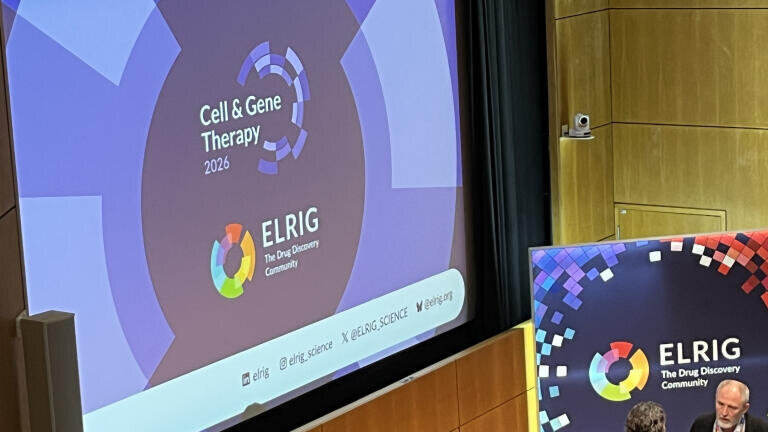
Speaking at the ELRIG meeting in March 2026 at the Hinxton Hall Conference Centre on the Wellcome Genome Campus, Miccio examined how treatment strategies for sickle cell disease and beta-thalassaemia have evolved from early lentiviral gene-addition approaches towards more precise genome-editing methods. Her presentation showed that autologous transplantation of genetically modified haematopoietic stem and progenitor cells has proved that these inherited blood disorders can respond to genetic intervention, while also exposing the limits of current practice.
Beta-haemoglobinopathies arise from mutations that disrupt production of the adult haemoglobin beta chain. The only established curative treatment remains allogeneic transplantation of haematopoietic stem or progenitor cells, but this depends on a compatible donor and carries a risk of immunological complications. As a result, use of a patient’s own stem cells, collected, modified ex vivo and reinfused after conditioning, has become a central therapeutic goal.
Miccio explained that this autologous strategy avoids donor mismatch and graft-versus-host complications, but remains complex. Existing lentiviral and CRISPR-Cas9 approaches have not worked equally well in all patients and have raised concerns about durability, toxicity, manufacturability and long-term safety.
A central theme of the presentation was the biological condition of stem cells before manipulation. Miccio described evidence that haematopoietic stem and progenitor cells from patients with sickle cell disease can carry inflammatory and stress-related transcriptional signatures. These features appeared particularly relevant in patients whose modified cells later failed to engraft efficiently.
This observation broadened the explanation for variable clinical outcomes. Rather than attribute failure solely to gene-transfer tools, Miccio argued that baseline stem-cell quality may play a decisive role. Disease-associated inflammation, interferon signalling and cellular stress may reduce stem-cell fitness, impair homing to the bone marrow niche and weaken long-term repopulating capacity.
She also presented evidence that this inflammatory state may be modifiable. Analyses from her laboratory, including single-cell studies, indicated that anti-inflammatory treatment before stem-cell collection could dampen adverse molecular signatures. This suggested that optimisation of patient condition before apheresis may improve the quality of collected cells and enhance the success of ex vivo gene therapy.
The presentation then reviewed established gene-therapy methods. Lentiviral vector strategies introduce a therapeutic beta-globin transgene into autologous stem cells, followed by reinfusion after myeloablative conditioning. These approaches have delivered durable engraftment and clinically meaningful haemoglobin production in some patients, but have produced only partial benefit in others, again highlighting the importance of patient-specific biology.
Miccio then turned to CRISPR-based approaches, particularly those designed to reactivate foetal haemoglobin rather than correct the primary mutation. This strategy has gained prominence because foetal haemoglobin can compensate for defective adult beta-globin. In sickle cell disease, it reduces haemoglobin polymerisation and red-cell sickling. In beta-thalassaemia, increased gamma-globin production can offset beta-globin deficiency.
This approach draws on hereditary persistence of foetal haemoglobin, a naturally occurring condition that mitigates disease severity. Miccio described promoter-targeting strategies that mimic such variants within the gamma-globin regulatory region. Earlier CRISPR-Cas9 work from her group showed that disruption of repressor binding sites can reactivate foetal haemoglobin and reduce sickling after erythroid differentiation. However, she emphasised that double-strand break-based editing carries risks.
CRISPR-Cas9 nucleases can activate p53, provoke inflammatory responses and generate unintended insertions, deletions or genomic rearrangements. These effects may prove especially problematic in stem cells already under stress.
This concern framed the discussion of next-generation editing technologies. Miccio presented base editing, prime editing and epigenome editing as alternatives that may reduce or avoid double-strand DNA breaks. These approaches reflect a broader shift towards tools that can introduce precise changes with fewer genomic lesions.
Among these, base editing appeared most advanced. Miccio described adenine base editors that install hereditary persistence of foetal haemoglobin-like mutations in gamma-globin regulatory regions. One British variant produced strong foetal haemoglobin induction. Optimisation of editor design, messenger ribonucleic acid configuration and delivery conditions improved editing efficiency.
The resulting cells showed robust foetal haemoglobin production and reduced sickling. Transcriptomic analyses suggested less cellular perturbation than with Cas9-based methods. Safety assessments showed no clear increase in off-target ribonucleic acid or deoxyribonucleic acid editing in the assays used, while transplantation experiments indicated that long-term repopulating cells could retain edited alleles. These findings suggested that base editing may provide a more tractable route to foetal haemoglobin reactivation.
Prime editing offered greater theoretical flexibility, as it can install combinations of substitutions, insertions and deletions without double-strand breaks. Miccio described exploratory work in which multiple hereditary persistence variants were introduced into the gamma-globin promoter. While conceptually strong, editing efficiency in patient-derived stem cells remained too low for immediate clinical use, despite ongoing improvements.
Epigenome editing formed a third approach. Rather than alter DNA sequence, this method modifies chromatin state at the gamma-globin locus to restore foetal haemoglobin expression. Miccio described catalytically inactive CRISPR systems fused to effector domains that deposit activating marks or remove repressive ones. This strategy achieved meaningful induction, although not yet at the level of sequence-editing approaches, and offered a potentially safer and reversible therapeutic option.
Miccio then addressed implementation challenges. Current ex vivo gene therapies remain complex, toxic and costly. They require stem-cell mobilisation, genetic manipulation under specialised conditions, conditioning chemotherapy and reinfusion within advanced clinical infrastructure. This model is difficult to scale for a global disease burden in which many patients with sickle cell disease live in Africa.
She argued that treatments confined to specialist centres cannot represent a complete solution. The field must therefore pursue in vivo editing and simpler delivery systems, including nanoparticle-based approaches that may target cells directly in the body. If sufficiently precise and efficient, such methods may reduce dependence on intensive conditioning and complex manufacturing workflows.
Miccio also raised the possibility of prenatal or early-life intervention, on the basis that treatment before irreversible organ damage develops may transform outcomes, although substantial biological, ethical and regulatory challenges remain.
Overall, Miccio presented gene therapy for beta-haemoglobinopathies as a field that has moved beyond proof of principle. Lentiviral vectors and Cas9-based strategies have demonstrated therapeutic potential but have also exposed biological and logistical limitations. The next phase will depend on more precise editing platforms, improved control of inflammatory and microenvironmental constraints and sustained efforts to reduce cost and complexity. The central question is no longer whether gene therapy can work for sickle cell disease and beta-thalassaemia, but how to make it safe, durable and accessible to the patients who need it most.
ILM 51.6 Sept 2026



 Product directory















.jpg)
.jpg)








.jpg)
