Laboratory events news
Professor Paul Gissen told delegates at ELRIG 2026 that gene therapy has begun to change the outlook for some childhood dementias but warned that delayed diagnosis, safety concerns and limits in therapeutic delivery to the brain still restrict treatment
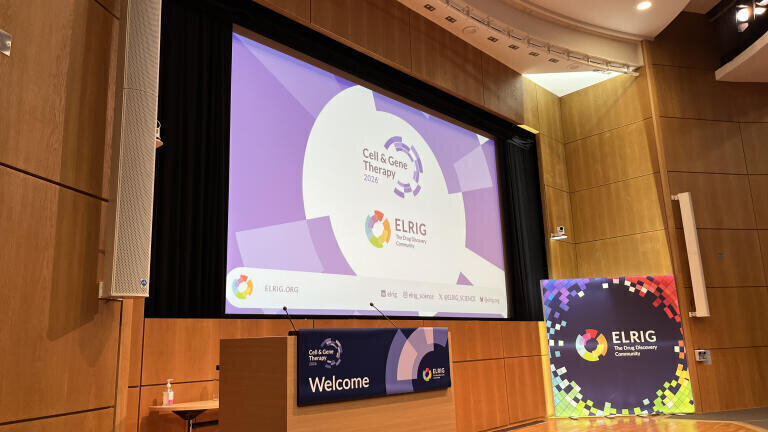
Childhood dementias have long remained one of the least visible and least well served areas of paediatric medicine, despite the severity of the diseases involved and the speed with which many affected children decline. Professor Paul Gissen, clinical professor of paediatric metabolic medicine at the University College London, Great Ormond Street Institute of Child Health, set out the scale of that challenge and reviewed how gene therapy has started to reshape the field in a presentation at the ELRIG meeting in March 2026 at the Hinxton Hall Conference Centre on the Wellcome Genome Campus, Cambridge, UK.
His talk focused on a group of disorders that receive far less public and clinical attention than adult dementias yet often progress far more rapidly with devastating consequences for the sufferer. Childhood dementias collectively comprise more than 100 progressive neurodegenerative and neurometabolic disorders and Gissen referenced more than 145 conditions that belong to this wider category. Together, they cause loss of cognitive, behavioural and motor function early in life, often after a period of apparently normal development. The affected families experience a child with severe disease, diagnostic delay – worse still oftentimes a misdiagnosis – and then the absence of effective treatment options.
Gissen explained that many children first come to medical attention with non-specific symptoms such as behavioural change, developmental delay, school difficulties, seizures or confusion. At this stage, a child may receive an alternative explanation, such as attention deficit disorder or a more generalised developmental problem. Eventually the pattern of progressive decline, however, becomes unmistakable. But by then, valuable time has already been lost. He made clear that this diagnostic lag has become one of the defining obstacles in the field because many of the most promising therapies appear to work best before substantial – and irreversible – neurological injury has occurred.
Childhood dementia remains comparatively neglected in therapeutic development, despite the number of patients affected and the severity of disease burden. Gissen argued that this mismatch between need and investment historically has left many patients with little more than supportive care. At the same time, he showed that this picture has started to shift. Progress in viral vector engineering, manufacture and central nervous system (CNS)-targeted delivery has accelerated the development of gene therapies for several disorders. Even so, he cautioned that progress has been uneven and that scientific success in one setting has not removed wider challenges around safety, access or scalability.
One of the clearest examples of therapeutic progress came from metachromatic leukodystrophy, a lysosomal storage disorder caused by deficiency of arylsulfatase A. In this disease, sulfatides accumulate in the body, particularly in the CNS and peripheral nervous systems which leads to progressive demyelination and on to neurodegeneration. Gissen highlighted a clinical spectrum that ranges from rapidly progressive early-onset disease to later-onset forms with slower decline.
He explained that children with the late infantile form usually present before the age of two and a half years and show a mainly motor phenotype – loss of mobility, weakness and severe deterioration. Later-presenting patients may show behavioural and cognitive involvement at first but they too deteriorate relentlessly. Magnetic resonance imaging typically reveals striking white matter changes, yet diagnosis still often comes late relative to the earliest pathological changes.
But Gissen then used this condition to highlight one of the strongest success stories in childhood dementia gene therapy. He described an ex vivo lentiviral haematopoietic stem cell approach in which a patient’s own CD34-positive stem cells are collected, genetically corrected outside the body and then returned following conditioning. This strategy has produced substantial benefit in carefully selected patients. Presymptomatic children with late infantile disease and presymptomatic or early symptomatic children with early juvenile disease have shown markedly better survival and preservation of motor function than their untreated peers.
That outcome, he suggested, has provided compelling proof that gene therapy can alter the course of at least some childhood dementias. Yet he also underlined the limit of that success. Approval has applied only to a narrow group of patients, particularly those identified before the onset of major symptoms. In practice, this requires exceptionally rapid diagnosis. In the UK, where newborn screening has not routinely identified all such cases, many children still present outside the therapeutic window.
The second major example concerned X-linked adrenoleukodystrophy, especially the cerebral form which is seen in boys. This peroxisomal disorder results from mutations in the ABCD1 gene, which encodes a transporter involved in the handling of very long-chain fatty acids. Boys may first show subtle problems such as poorer school performance or behavioural disturbance before they enter a phase of severe neurological decline that includes impaired language, visual loss, difficulty in swallowing, seizures and increasingly progressive care dependence.
He noted that allogeneic haematopoietic stem cell transplantation can be effective but carries considerable risk, including graft failure, graft-versus-host disease and transplant-related mortality. Against that background, autologous lentiviral gene therapy appears to be more attractive. Early clinical data has shown strong efficacy, with high survival rates and stabilisation or improvement in neurological outcomes in many boys who have been treated.
However, Gissen emphasised that gene therapy cannot be judged solely on early efficacy with long-term safety being equally critical. Follow-up studies in treated patients have shown that some have developed haematological malignancies, most commonly myelodysplastic syndrome and in some cases acute myeloid leukaemia. Molecular analysis suggested that vector integration near oncogenic loci, together with additional somatic mutations, contributed to clonal expansion and leukaemogenesis.
He presented this as a defining lesson for the field with the platform which has been shown to preserve neurological function perhaps introducing serious long-term risk. Indeed in the USA which had seen the FDA give regulatory approval, use of the therapy became restricted, particularly to boys without a matched donor. In Europe the product was also withdrawn. His wider message was clear that durable surveillance is essential, vector design matters and the field cannot afford any complacency.
The final section focused on neuronal ceroid lipofuscinosis, particularly CLN2 disease. Gissen described a condition in which children develop normally in early life, only to rapidly lose language and motor function at around the age of three years. Brain atrophy progresses quickly and the loss of the patient’s sight becomes a central feature. Enzyme replacement therapy delivered into the cerebrospinal fluid has been shown to slow progression and has received regulatory approval – but it is not curative – and requires repeated administration which is invasive and, ultimately, does not prevent blindness.
He went on to described adeno-associated virus gene therapy targeted at the eye in CLN2 disease to address the retinal component. Subretinal delivery restored tripeptidyl peptidase 1 activity and – in some patients – retinal lesions appeared to recede, suggesting partial reversal rather than simple stabilisation. He also referred to an early intracerebroventricular case in Brazil in which CNS-directed therapy restored enzyme activity and reduced seizure burden.
These examples illustrated a central scientific theme in that the therapeutic delivery route matters. Disorders that affect the brain, retina or both require strategies that can reach these tissues reliably. Gissen reviewed intrathecal, intracerebral and intracerebroventricular approaches but made clear that the field has not solved this problem. Brain biodistribution remains challenging, vector performance is often suboptimal and – additionally – manufacture must become more efficient if these therapies are to reach wider clinical use.
Gissen closed with a pragmatic assessment of the gap between preclinical promise and clinical success. Several programmes have shown encouraging results in early studies but later stalled or failed. This pattern reflects the difficulty of the biology and the technical demands of treatment. Better biomarkers, earlier diagnosis and testing, safer vectors and scalable manufacture are all still required.
Childhood dementias may no longer be disorders that always prove to be a death sentence. In some cases, stabilisation has become possible and meaningful improvement may yet be within reach. However, therapies are complex, patient selection is critical, and long-term follow-up is indispensable with presumptions of safety not yet possible.
ILM 51.6 Sept 2026



 Product directory
















.jpg)

.jpg)









.jpg)
