Laboratory events news
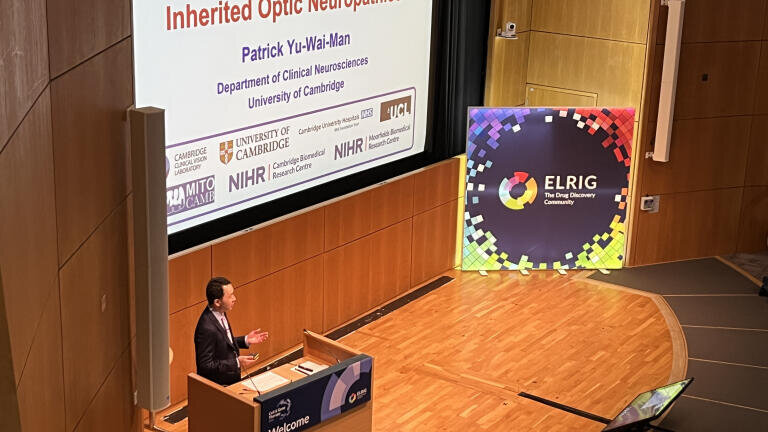
Professor Patrick Yu Wai Man has outlined how mitochondrial biology, clinical genetics and ocular gene therapy have started to reshape treatment prospects for inherited optic neuropathies, with Leber hereditary optic neuropathy and dominant optic atrophy at the centre of a fast-moving translational effort
Inherited optic neuropathies have entered a decisive phase in translational medicine, as progress in mitochondrial biology and ocular gene therapy has begun to shift a field that until recently offered little beyond diagnosis and supportive care.
In a presentation that integrated clinical practice, genetics and therapeutic development, Professor Patrick Yu Wai Man described how the treatment landscape for these severe visual disorders has started to change. He characterised inherited optic neuropathies as uncommon but clinically significant diseases that often affect individuals early in life and can lead to profound, permanent visual disability. The central challenge, he explained, has been to convert molecular insight into interventions that preserve retinal ganglion cells and maintain vision.
The discussion focused on Leber hereditary optic neuropathy, or LHON, and dominant optic atrophy, or DOA. Both are mitochondrial optic neuropathies but arise from distinct genetic mechanisms. LHON results from pathogenic variants in mitochondrial DNA, whereas DOA typically reflects mutations in nuclear genes that regulate mitochondrial maintenance and dynamics.
LHON remains one of the most important inherited optic neuropathies in mitochondrial medicine, with an estimated prevalence of around 1 in 30,000. Most cases arise from three mitochondrial DNA point mutations: m.3460G>A in MT-ND1, m.11778G>A in MT-ND4 and m.14484T>G in MT-ND6. These account for approximately 90 per cent of cases, with m.11778G>A the most common in the UK.
Clinically, LHON usually affects young adults and shows a marked male predominance. Patients present with painless, subacute visual loss in one eye, followed by the second eye within weeks or months. The acute phase may include optic nerve swelling and hyperaemia, but this typically progresses to optic atrophy and severe central vision loss. At a molecular level, the mutations impair complex I of the mitochondrial respiratory chain, reduce energy production and increase reactive oxygen species, placing retinal ganglion cells under metabolic stress.
Retinal ganglion cells, which transmit visual information from the retina to the brain, appear particularly vulnerable because of their high energy demands. Once a critical number are lost, central vision declines sharply and recovery becomes unlikely. Although spontaneous improvement can occur in a minority of patients, many experience severe and lasting visual impairment.
One treatment already in clinical use is idebenone. Professor Yu Wai Man described this small-molecule therapy as an early attempt to intervene in disease mechanism. Idebenone supports electron transport and reduces oxidative stress in cells with impaired complex I function. Its clinical development has reflected both promise and limitation. Early randomised trials suggested benefit but did not achieve unequivocal primary-endpoint success, although longer-term follow-up and real-world experience have proved more encouraging.
In clinical practice, a proportion of patients has shown measurable visual improvement after idebenone treatment. Gains of one or two lines of visual acuity may appear modest but can translate into meaningful functional benefit. Observations have also challenged earlier assumptions about treatment timing, with evidence to suggest that the therapeutic window may extend beyond the acute phase.
These limitations have driven interest in gene therapy. In LHON, the principal challenge lies in the mitochondrial location of the mutation. Because direct manipulation of mitochondrial DNA remains difficult, alternative strategies have been required. Professor Yu Wai Man highlighted allotopic expression as a leading approach for the common m.11778G>A mutation. In this strategy, a nuclear-encoded version of the ND4 gene is delivered via a viral vector, and the resulting protein is subsequently targeted back to the mitochondrion.
This approach has progressed from preclinical studies to human trials. Laboratory work demonstrated that allotopic expression can reduce biochemical dysfunction and improve visual outcomes in disease models, which has supported early-phase and international clinical studies. Ophthalmology offers distinct advantages for such interventions, as the eye is accessible, outcomes are measurable with precision and intravitreal injection is an established technique.
Clinical data have begun to challenge previous assumptions about disease reversibility. Benefit has not been restricted to patients treated soon after onset, and long-term follow-up extending to five years has shown sustained divergence from natural history. Safety has remained a key concern. Initial trials favoured unilateral injection because of risks such as inflammation, haemorrhage and infection. However, emerging evidence has indicated that bilateral treatment may be feasible without severe adverse signals.
Despite this progress, important barriers remain. Regulatory authorities have continued to require larger and more rigorously controlled studies before wider approval can occur. A more fundamental limitation relates to disease biology, as many patients present after substantial retinal ganglion cell loss. Gene therapy may restore function in surviving cells but cannot replace neurons that have already degenerated.
The presentation then turned to dominant optic atrophy, the most common inherited optic neuropathy in clinical practice. DOA affects at least 1 in 25,000 individuals and usually presents in childhood. In contrast to the abrupt visual decline seen in LHON, DOA produces a more gradual optic neuropathy driven by progressive retinal ganglion cell loss.
The condition is genetically heterogeneous, although mutations in OPA1 account for around 60 to 70 per cent of cases, with more than 400 variants identified. OPA1 plays a central role in mitochondrial dynamics, particularly in maintenance of inner mitochondrial membrane structure and fusion. This creates a distinct therapeutic challenge, as both insufficient and excessive OPA1 activity can disrupt mitochondrial balance.
As a result, therapeutic strategies for DOA differ from those for LHON. Professor Yu Wai Man described messenger RNA transplicing and antisense oligonucleotide approaches as promising avenues to correct or modulate gene expression at the transcript level. Early clinical studies have begun to emerge, although the field remains at an earlier stage than LHON gene therapy.
Taken together, the presentation described a field that has moved from genetic characterisation towards therapeutic intervention. Inherited optic neuropathies remain serious, life-altering conditions, and no universal cure exists. However, prospects have improved substantially. For LHON, idebenone and gene therapy have shown that visual function can improve in a subset of patients. For DOA, transcript-targeted strategies have started to progress towards clinical evaluation.
“After decades in which inherited optic neuropathies were largely untreatable, we are now in a position where advanced therapies may begin to alter the natural history of these diseases,” said Professor Patrick Yu Wai Man.
ILM 51.6 Sept 2026



 Product directory
















.jpg)

.jpg)










.jpg)
