Laboratory events news
Invariant natural killer T cells have emerged as a potentially versatile allogeneic platform for blood cancer immunotherapy, with preclinical evidence suggesting stronger tumour control, improved trafficking and broader functional activity than conventional chimeric antigen receptor T-cell approaches in leukaemia, lymphoma and multiple myeloma
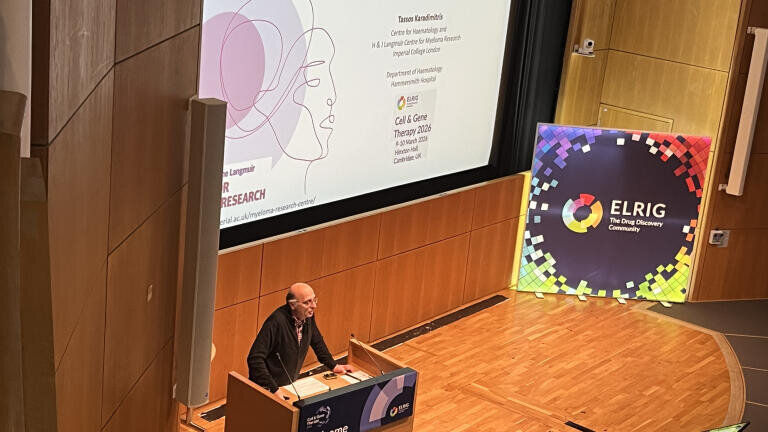
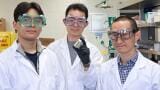
Professor Anastasios Karadimitris, co-director of the Centre for Haematology at Imperial College London, set out a translational case for invariant natural killer T cells as a potentially important allogeneic platform for immunotherapy in haematological malignancies during his presentation at the ELRIG meeting at the Wellcome Genome Campus conference centre, Hinxton Hall, Cambridgeshire, in March 2026. Although the source transcript contained distortion, the core scientific argument remained sufficiently clear to recover the principal themes.
He described invariant natural killer T cells, or iNKT cells, as a rare but biologically distinctive lymphocyte population with unusual therapeutic potential. These cells combine innate and adaptive immune features, exert both direct effector and immunoregulatory functions, and recognise lipid antigens presented by the major histocompatibility complex-like molecule CD1d rather than conventional major histocompatibility complex molecules. Taken together, these characteristics support the view that iNKT cells may provide a foundation for off-the-shelf chimeric antigen receptor, or CAR, and engager-based immunotherapy in blood cancers.
A central theme concerned the biological distinctiveness of iNKT cells. Karadimitris described them as a very rare subset of T cells that circulate at low frequency yet possess features that make them particularly attractive for therapeutic development. Their semi-invariant T-cell receptor and capacity to bridge innate and adaptive immunity distinguish them from conventional T lymphocytes. Within this framework, the cell type emerged not simply as another immune effector to engineer, but as a population whose intrinsic biology may help to address limitations of autologous CAR-T cell therapy.
The prospect of donor-derived, allogeneic use formed a key part of the argument. Karadimitris proposed that iNKT cells may permit transfer from donor to recipient with a lower risk of graft-versus-host disease than that associated with conventional donor-derived T cells, which remains a principal barrier to universal cell therapy. If iNKT cells can be harvested from healthy donors, expanded at scale, engineered in a standardised manner and administered with reduced alloreactive toxicity, they could support a shift away from bespoke patient-specific manufacture towards a scalable off-the-shelf product.
From this platform perspective, the presentation moved to cellular engineering. Karadimitris explained that iNKT cells may function as therapeutic agents in unmodified form, but also as engineered products equipped with CARs or engager constructs. The transcript indicated that the group had generated preclinical evidence of stronger anti-tumour activity from CAR-iNKT cells than from conventional CAR-T cells in models of leukaemia, lymphoma and multiple myeloma. This suggested that iNKT cells not only tolerate engineering, but also retain and exploit their intrinsic biology after modification in ways that enhance therapeutic performance.
A substantial portion of the presentation focused on B-cell malignancies, particularly B-cell acute lymphoblastic leukaemia and related CD19-positive disease. Karadimitris described CAR constructs directed against tumour-associated antigens and compared engineered iNKT cells with both unmodified iNKT cells and conventional CAR-T products. The case extended beyond proof of function in preclinical models to comparative performance. The transcript referred to stronger tumour control, improved persistence and superior survival in treated animals, alongside imaging evidence of more rapid or complete tumour reduction. These effects appeared to arise from a combination of enhanced tumour clearance, prolonged survival and more effective tissue trafficking.
Manufacturability also featured prominently. Karadimitris referred to the ability to expand iNKT cells to levels compatible with clinical-scale production. A donor-derived therapy can succeed only if it can be manufactured efficiently, reproducibly and in sufficient quantity to support stockpiling and distribution. His argument indicated that iNKT cells can now be expanded to a degree that renders an off-the-shelf strategy technically plausible.
The presentation also addressed antigen heterogeneity and immune escape. Karadimitris described multi-antigen strategies, including dual-target and engager-based approaches, in leukaemia models. If a tumour downregulates or loses a single antigen under selective pressure, a therapy directed at one target may fail. By contrast, a bispecific or dual-target approach broadens recognition and reduces the likelihood of immune evasion through antigen loss. According to the transcript, these designs outperformed single-target constructs both in vitro and in vivo, with improved survival and more durable disease control. Engineered iNKT cells also appeared to retain activity even when one target was experimentally removed, which suggested that anti-tumour function depends not only on the engineered targeting arm but also on intrinsic innate-like cytotoxic mechanisms.
Karadimitris further indicated that CAR engagement in iNKT cells does not act solely through the engineered receptor. Instead, activation may amplify natural killer-like pathways within the cell, including mechanisms linked to NKG2D. This could enable tumour killing that is less dependent on a single antigen and less vulnerable to variation in antigen density.
A notable element of the presentation concerned central nervous system disease. Karadimitris discussed models in which leukaemia had entered the brain or meningeal compartment and argued that CAR-iNKT cells possess a trafficking advantage over CAR-T cells. The transcript referred to adhesion, rolling and transmigration across the blood–brain barrier, with particular emphasis on very late antigen-4, or VLA-4, and its interaction with vascular cell adhesion molecule 1, or VCAM-1. His interpretation suggested that iNKT cells display a more active adhesion phenotype, which allows them to enter difficult anatomical sites and attack malignant cells in sanctuary compartments. This translated into higher numbers of CAR-iNKT cells in meningeal or brain-associated regions, reduced disease burden and improved survival.
The second major disease context was multiple myeloma, where the focus shifted to optimisation of CAR architecture. Karadimitris described the use of B-cell maturation antigen, or BCMA, as a target and compared second-generation and third-generation CAR formats with different co-stimulatory domains. The transcript indicated that not all CAR designs performed equally well in iNKT cells. Some configurations produced stronger functional responses and better survival outcomes than others. He also referred to C-X-C motif chemokine receptor 4, or CXCR4, in relation to bone marrow homing. When this pathway was blocked, part of the therapeutic advantage diminished, which implied that efficient access to marrow disease sites contributes directly to efficacy.
By the close of the presentation, Karadimitris had extended the discussion from individual datasets to an overarching platform strategy. He concluded that iNKT cells may provide a versatile therapeutic backbone for blood cancers, with efficacy that could surpass conventional CAR-T cells while also offering practical advantages linked to donor-derived manufacture, stockpiling and potentially lower cost. He framed this not as a finished clinical solution, but as an evolving platform with scope to refine targeting, trafficking and potency across leukaemia, lymphoma and multiple myeloma.
ILM 51.6 Sept 2026



 Product directory















.jpg)
.jpg)






.jpg)
