Pipettes
Published over 8 years ago. See the latest and most current information on Pipettes.
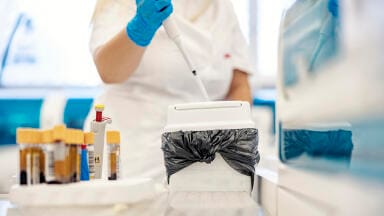
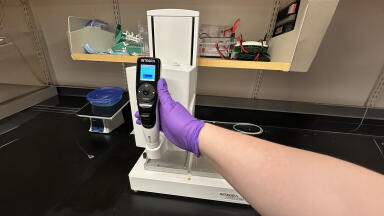
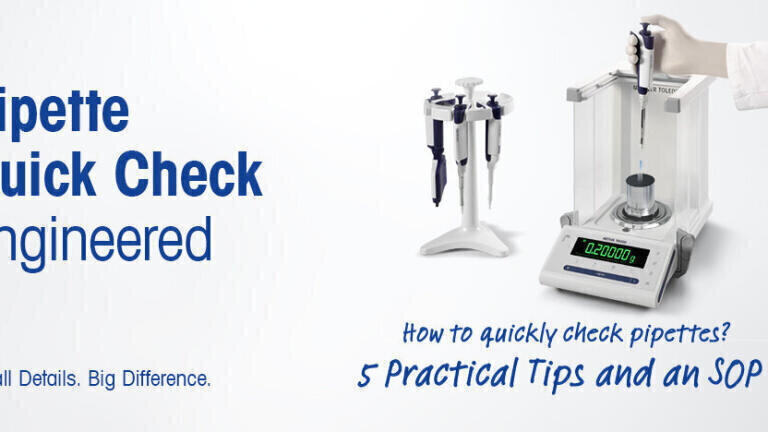
Are you planning an important experiment? Do you need to ensure that the pipette used measures correctly? As we all well know, pipettes get dropped and parts wear out. Therefore, verify the performance of your pipette by doing a gravimetrical quick check on your laboratory balance. Do you tend to skip pipette tests because you think they're difficult to perform? If so, Mettler Toledo’s free guide with 5 Practical Tips and an SOP included is for you. All you need is a balance, a vessel, or even better - an evaporation trap and some deionised water.
Why is it important to check your pipette’s performance? Up to 35% of pipettes sent to a service provider for calibration are out-of-specification, based on an East Coast Pharma study 1998-2003. If your pipette is one of these, does it mean you have to invest a lot of time and effort investigating which analyses could have been affected? What's the risk of your experiments leading to faulty results?
How can you avoid this? Reduce pipetting risk and perform regular quick checks to uncover any malfunctions early and eliminate surprises at your next calibration service.
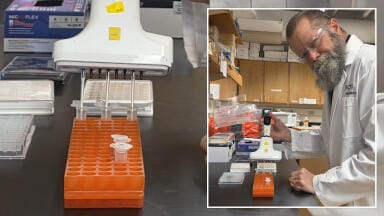
What should you consider when performing a Quick Check? Gravimetric pipette checks entail dispensing samples of distilled water into a receiving vessel which is set on an analytical balance. Find out why you should work in an environment that’s free from drafts, direct sunlight and vibration, and why it's important to consider evaporation loss during a gravimetric check, and how to minimise this by using an evaporation trap.
For each of the following 5 important prerequisites, Mettler Toledo has put together some helpful practical tips to ensure the process is successful:
1. Environment
2. Pipette and tips
3. Test liquid
4. Balance
5. Weighing vessel and evaporation
Discover why dishes or large 100 ml beakers, which are often used for pipette checks, are not suitable weighing vessels. In addition, the guide provides experimental data about parameters which determine the rate of evaporation, e.g. the larger the surface of the liquid in a vessel, the higher the respective evaporation.
How do you perform a Quick Check? Apply the included SOP and quickly uncover any malfunctions and remove failing pipettes from your routine laboratory work. Eliminate inaccuracies that would otherwise go undetected until your next service calibration.
Click here to download the guide now.
ILM 51.6 Sept 2026





 Product directory