Pipettes
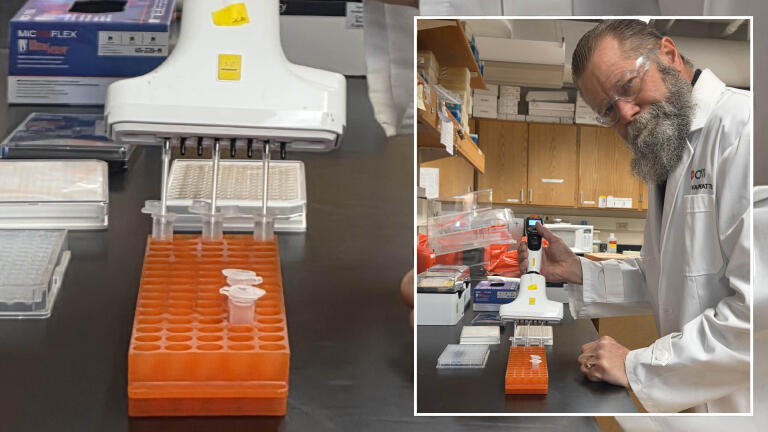
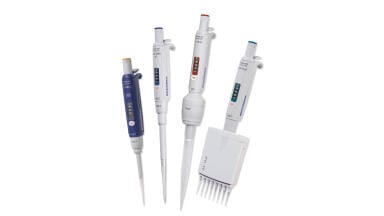
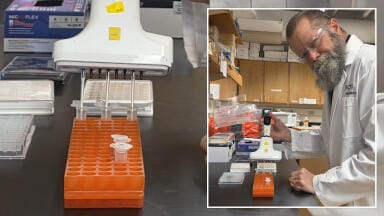
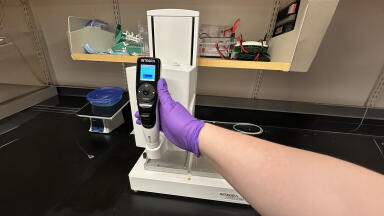
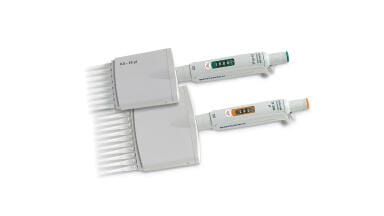
Researchers at Purdue University in Indiana, USA, are using VOYAGER adjustable tip spacing pipettes and PIPETBOY acu 2 serological pipet controllers from Integra Biosciences to increase the speed and reproducibility of drug discovery workflows focused on chronic pain.
The team is working to improve assay throughput in 384-well plate formats, supporting research into next-generation analgesics designed to reduce reliance on opioids.
Current chronic pain treatments often target ion channels distributed widely across the nervous system, which can lead to unwanted side effects. As a result, research is increasingly focused on more selective, non-opioid approaches that minimise off-target activity while maintaining therapeutic efficacy.
One area of interest is the regulation of adenylyl cyclase (AC) enzymes. Previous studies suggest that inhibition or genetic disruption of specific isoforms, particularly AC1, may significantly reduce chronic pain signalling and offer a more targeted therapeutic strategy with fewer systemic effects.
At Purdue University, the Watts laboratory, led by Professor Val Watts in the Borch Department of Medicinal Chemistry and Molecular Pharmacology, is investigating AC signalling pathways and potential enzyme inhibitors as part of this broader effort.
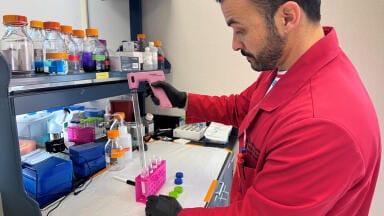
The team uses VOYAGER electronic pipettes and a PIPETBOY acu 2 system to streamline repetitive liquid handling steps across multiwell plate assays. These tools support flexible dispensing across different plate formats, helping to reduce manual variation and improve consistency in high-throughput experiments.
Professor Watts said: “We routinely need to pipette quickly and consistently in 384-well formats, and manual methods can introduce variability. The VOYAGER systems improve flexibility and reduce hands-on time, making high-throughput assay setup more efficient and reproducible.”
He added that the adjustable tip spacing functionality allows seamless transfer between tubes and different plate formats, supporting a more streamlined experimental workflow and freeing up time for core research into non-opioid pain mechanisms.
By improving the efficiency of assay preparation and plate handling, the approach is helping accelerate research into targeted treatments for chronic pain that avoid the limitations of conventional opioid-based therapies.
More information online
ILM 51.6 Sept 2026




 Product directory
















.jpg)